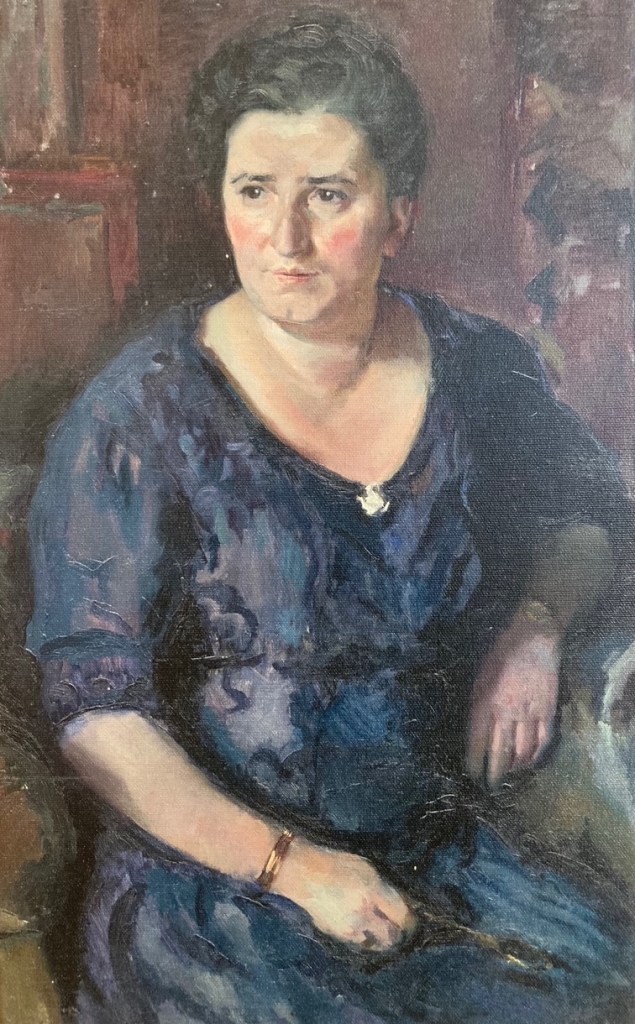
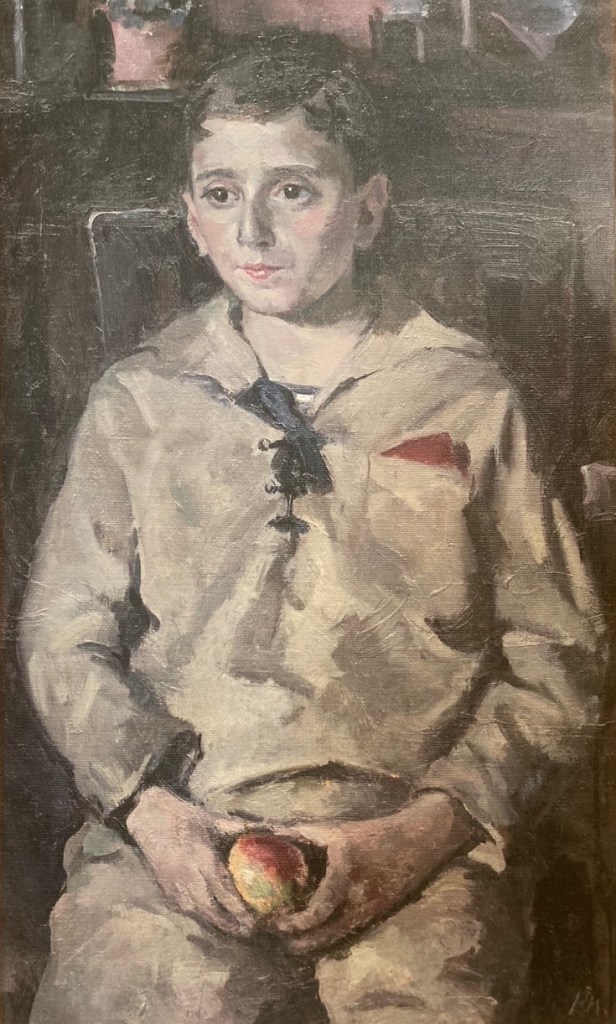
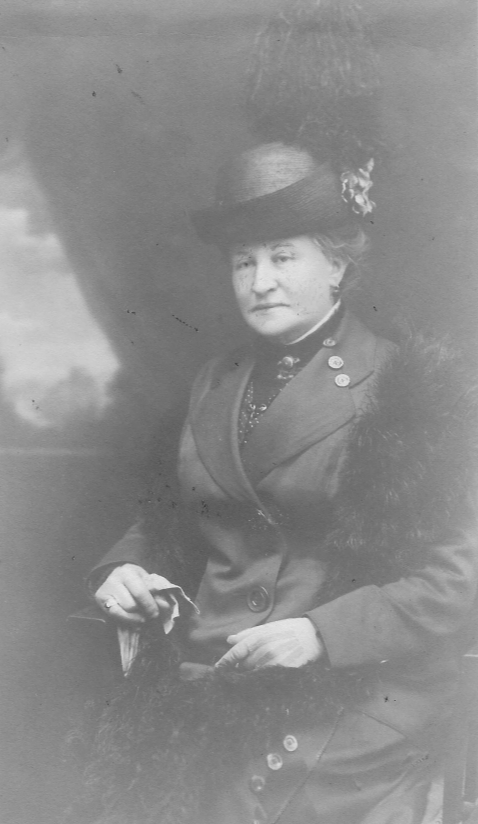
Viktor’s mother was Cicilia (or Cilla) Steckel, who was born 22 January 1879 in Tarnopol, Galizien to Debora (or Dwora) (née Steckel) and died 31 December 1939 in Paris, France.
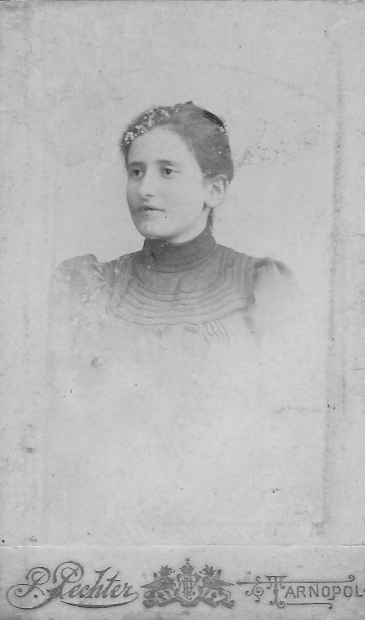
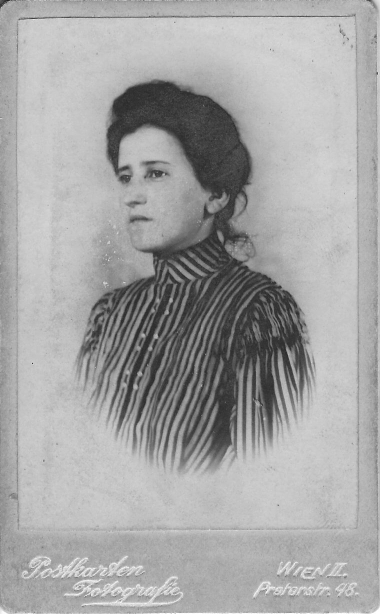
Her father was Elias Hirsch Wolf Helfenbein (died 24 February 1919 in Vienna.) Elias and Dwora (born 1855 in Tarnopol) had a number of children, all born in Tarnopol: Frende (born and died 1873), Josef Hirsh (born and died 1874), Blume (born 14 August 1876), Cicilia (1879), Fani (born and died 1880), and Schloma (born 1881, died 1882). Dwora died not long after Schloma’s birth, in 1881 at age 26, in Tarnopol.
Elias then married Hudes (or Adela) Schmarak, born 1855 in Tarnopol, died 1925 in Vienna) who also gave birth to a number of children in Tarnopol: Samuel (born 1882; died 1931 in Vienna); a stillborn baby in 1883, Lea (born 17 January 1885), Regina (born 15 September 1886), a stillborn baby in 1889, Chawy (born 5 April 1890), Salomon David (born 1 August 1891), and Bernhard (born 16 March 1896) .

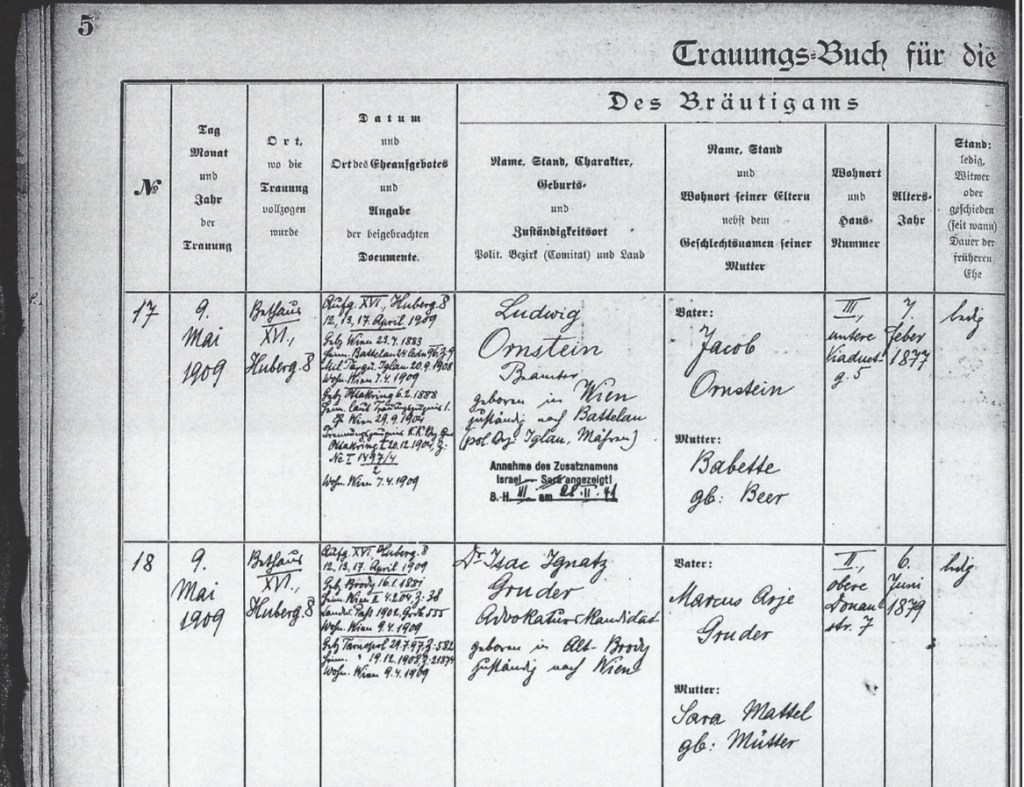
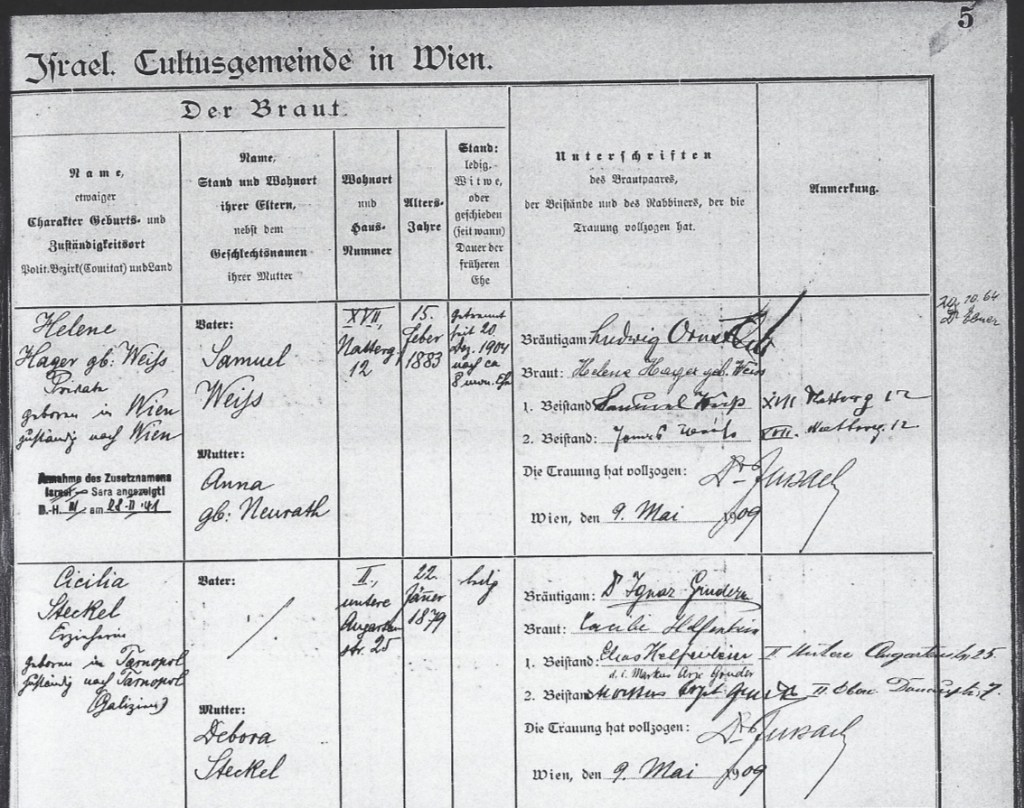
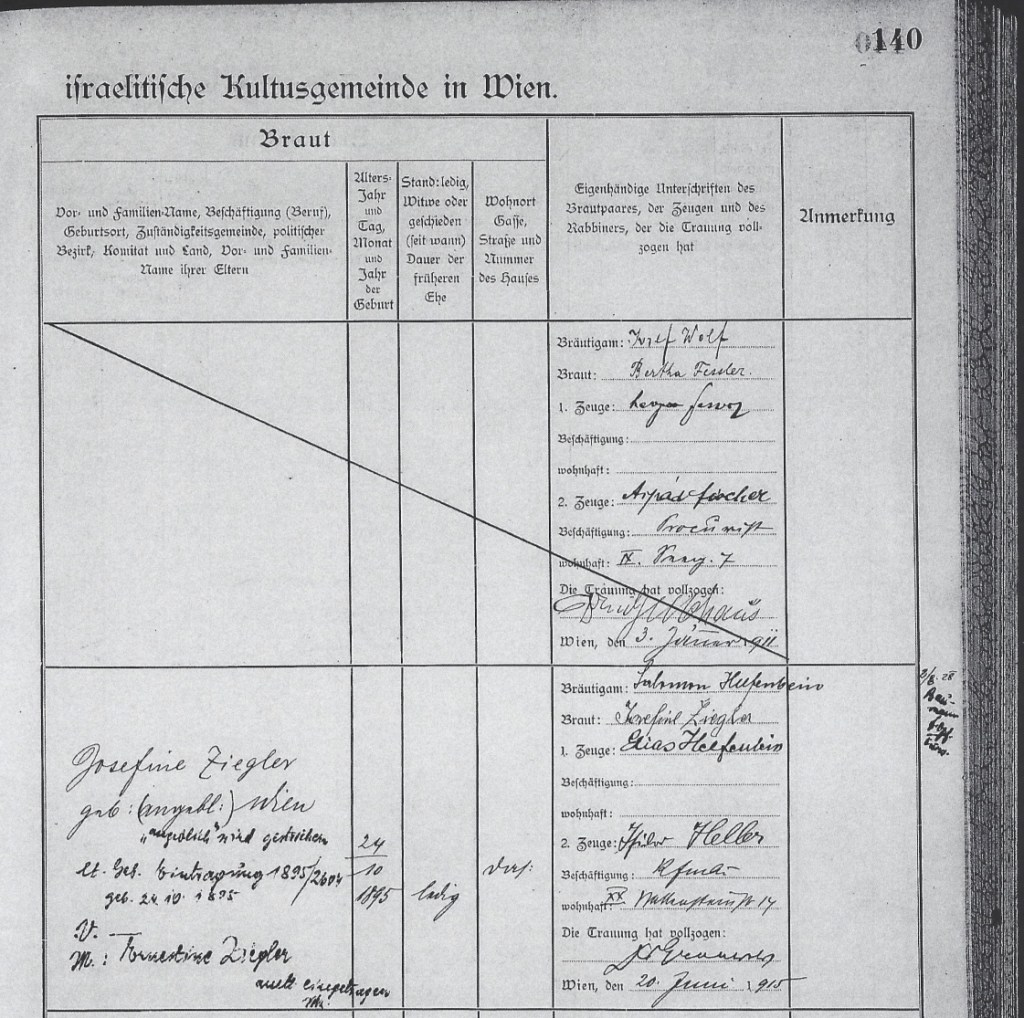
Cicilia’s surname was always Steckel in the records in Vienna since the Austro-Hungarian empire only recognized civil marriages (which were restricted to eldest sons and made very expensive), and not religious ones. Thus her documents bear her mother’s maiden name, Steckel. Furthermore, in the registry of Cicilia’s marriage, a stroke was drawn through the space for the father’s name and Elias Helfenbein was entered as present in the function of witness, not as her father.
Cicilia moved to Vienna as a young adult after some training as a teacher; her parents set up a small shop in Vienna. During Viktor’s childhood, Cicilia referred to four sisters and one brother:
-Blüme “Bianca” Helfenbein,
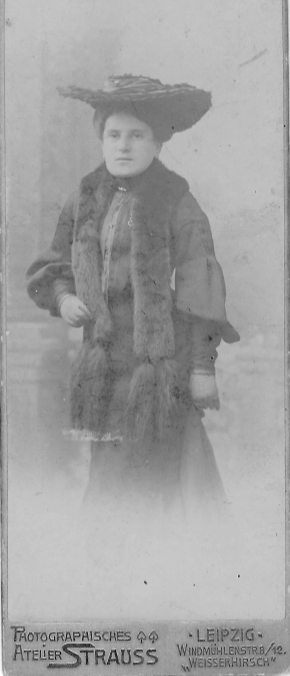
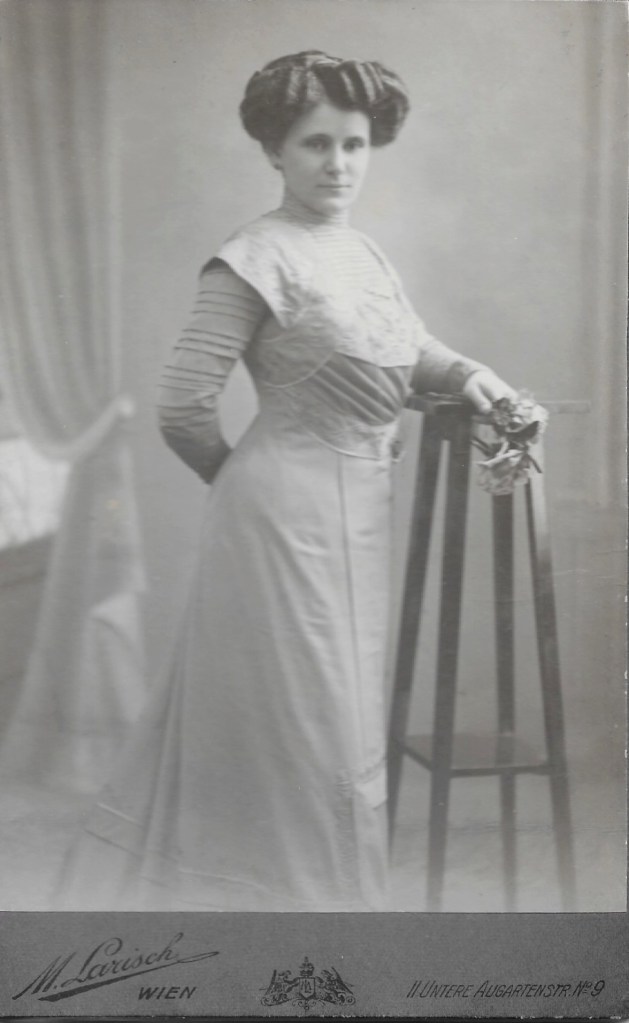
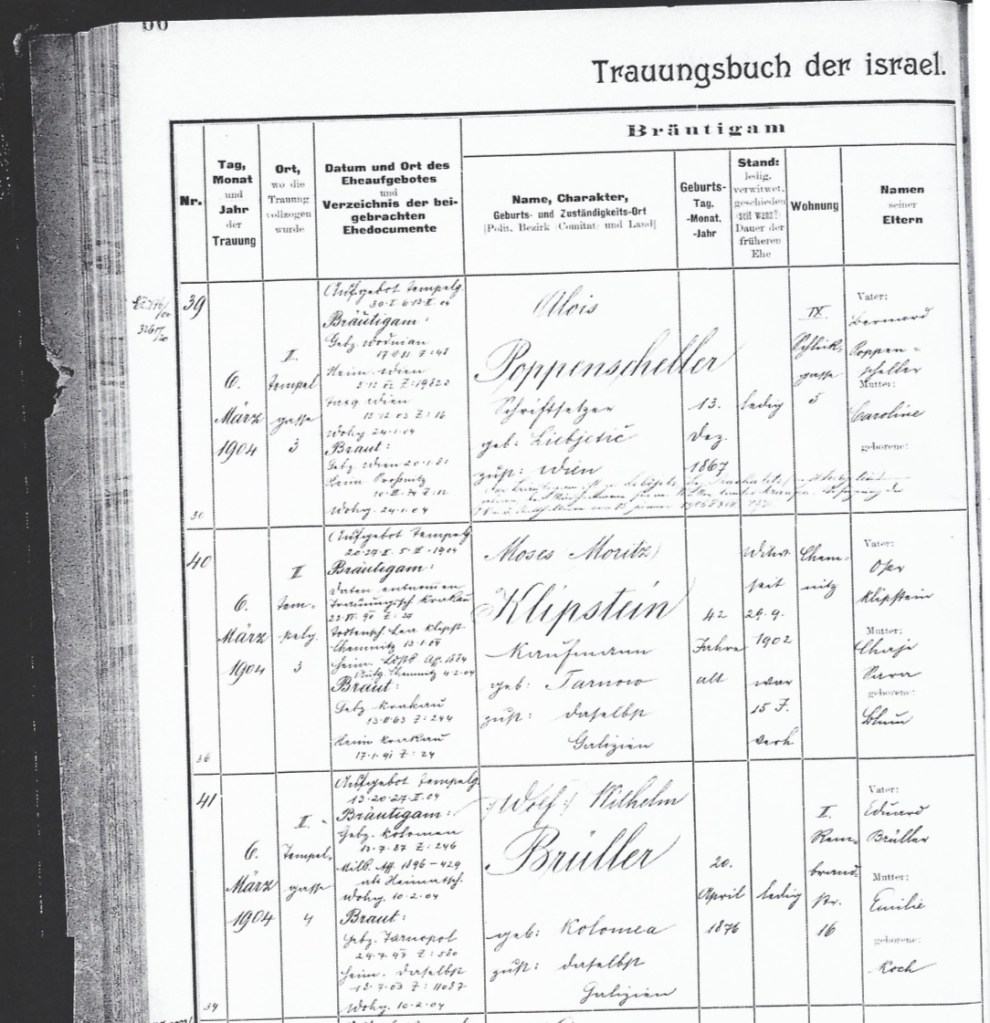
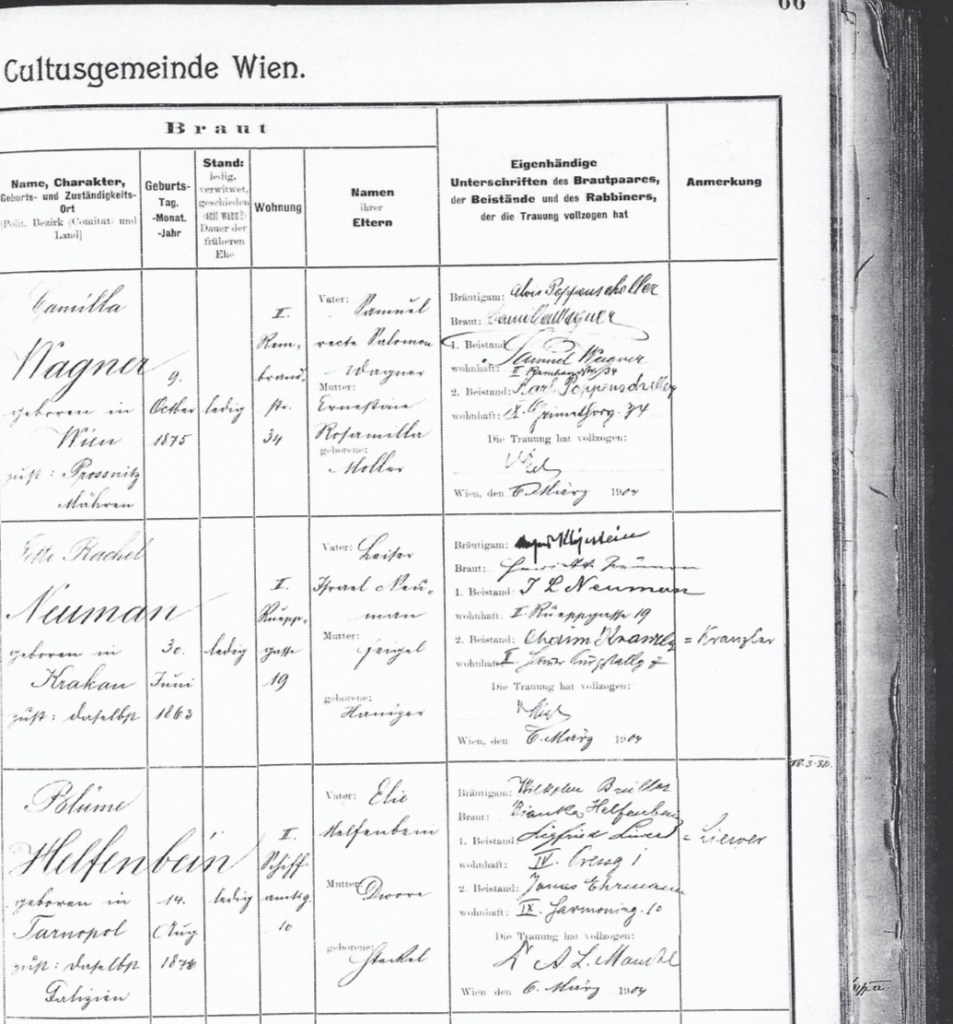
was married on May 6, 1904 in Vienna to Wolf Brüller (born April 20, 1876 in Kolonna). Blüme and Wolf had a son Arthur, born 1906, whose law education was paid for by Ignaz and who worked as a junior attorney in Ignaz’ practice, moved to Buenos Aires for a time, and then returned to Vienna after the war and resumed practicing law. Arthur died in Vienna in 1993.
-Eugenia (“Genia”),
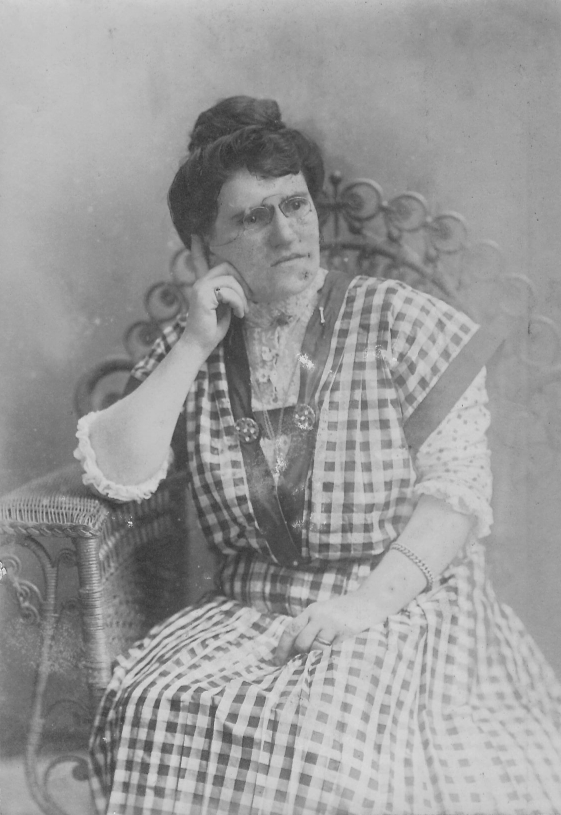
arrived in the U.S. on or about October 28, 1904, married Herman-Godfried Klein (“Uncle Toni”) (who arrived in the U.S. in April 1906 and became an American citizen on April 14, 1921), lived in Los Angeles, and together with her husband provided an affidavit for Viktor’s immigration to the United States. She had no children.
-Lea, or Laura, was born 17 January 1885 in Tarnopol. She never married, had no children, was deported with Transport 9 from Vienna to Lodz, Poland on 28 October 1941 and was later murdered.

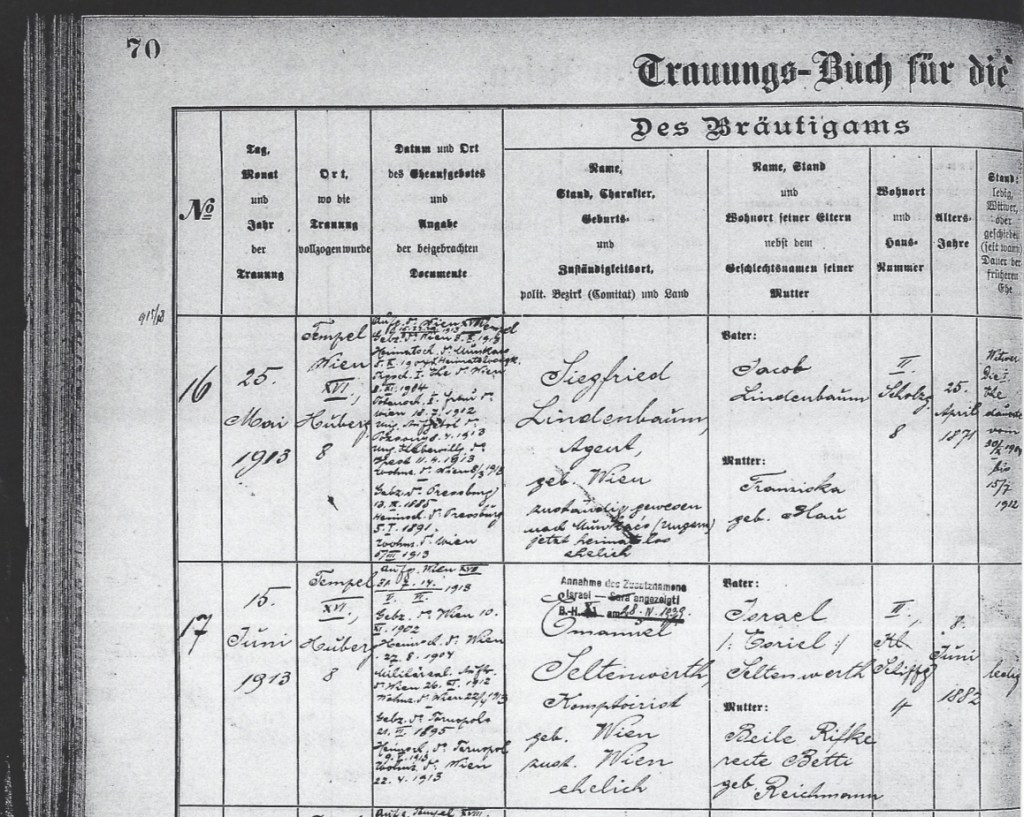
-Regina, born 18 September 1886, was married on 15 June 1913 in Vienna to Emanuel Seltenwerth (born in Vienna on 8 June 1882). A daughter Herta was born to them on 15 August 1921. Regina and Emanuel were deported with Transport 18 from Vienna to Wlodawa, Lublin, Poland on 27 April 1942 and later murdered.

-Salomon David Helfenbein, born 8 August 1891, was married on 20 June 1915 in Vienna to Josefine “Finni” Ziegler or Lowy (born in Vienna on October 24, 1895); their son Kurt was born in 1916 in Vienna; died at age 27, at the same time as his father Elias. Finni would later marry Salomon Erdheim in 1928; they were both murdered in Auschwitz. Kurt died in Lyon.

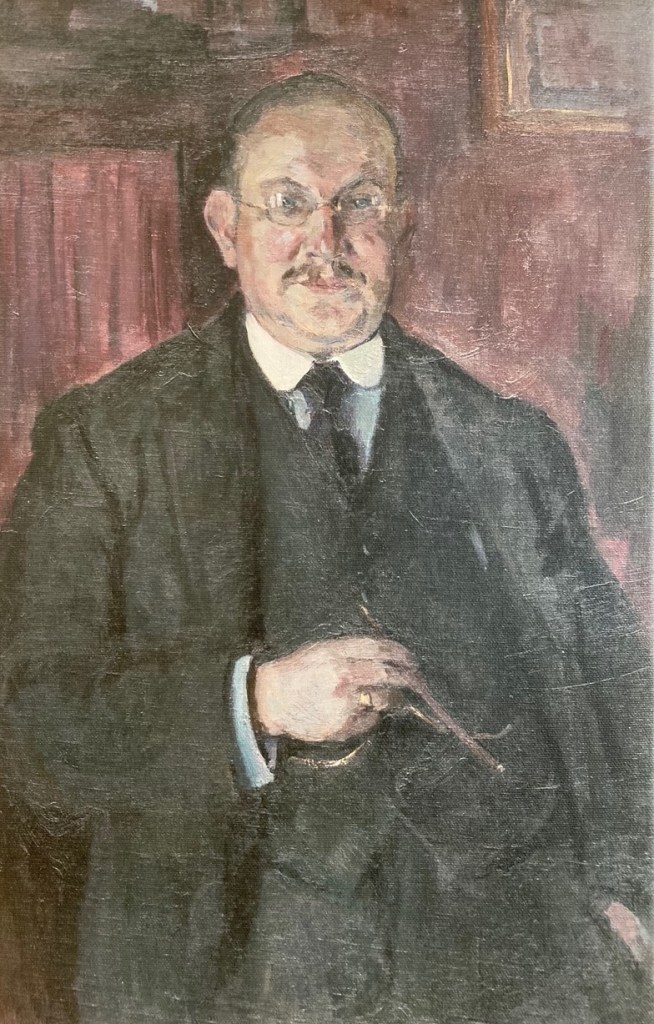
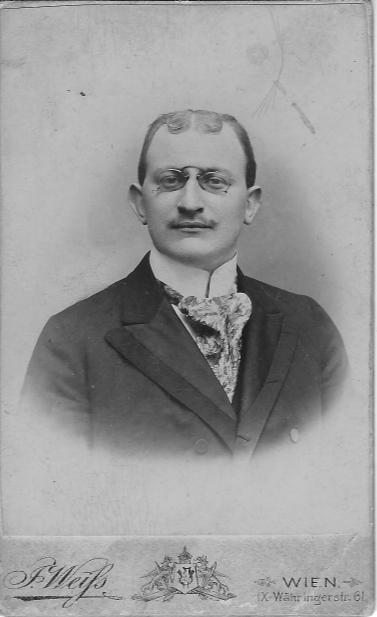
Viktor’s father, Isac Ignaz Gruder, was born 6 June 1879 in Brody, Galizien and died 14 April 1947 in Wiesbaden, Germany.
His parents were Markus Arje Gruder (b. 1845, d. 1912) who was a free thinker and a ‘spirituosenverschleiser’ (a liquor company salesman) and later a stock exchange agent, and Sara Sophie Mattel Muller (b.1852, d. 18 May 1916).
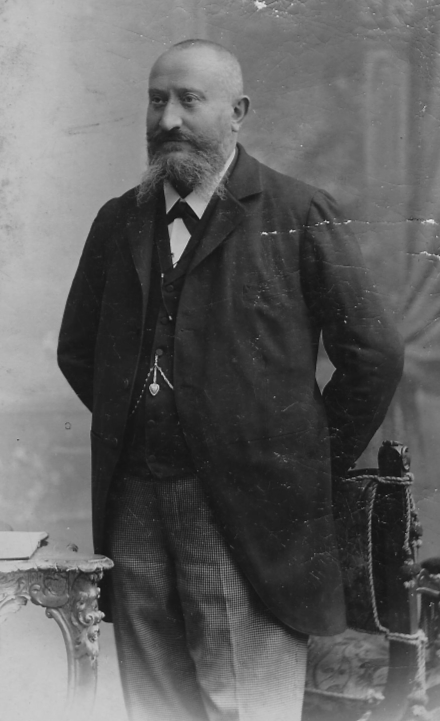
He had three brothers, in addition to a sister (name unknown) who died very young:
-Bernhard (Ber) Simon (Simche) born 8 September, 1873 in Lemberg, Poland, married Gisela Heissfeld (Heiszfeld) (born January 4, 1875 to Moritz Heiszfeld and Charlotte née Fleischmann in Sassin, Austria) on March 15, 1903 in Vienna.
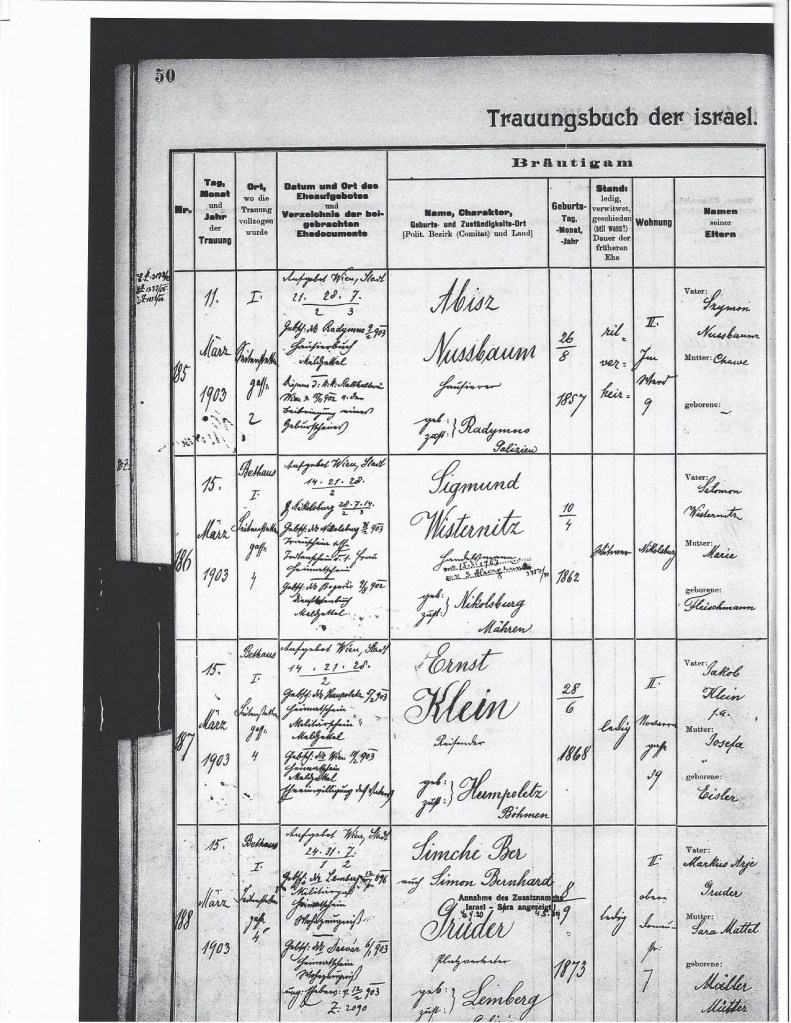
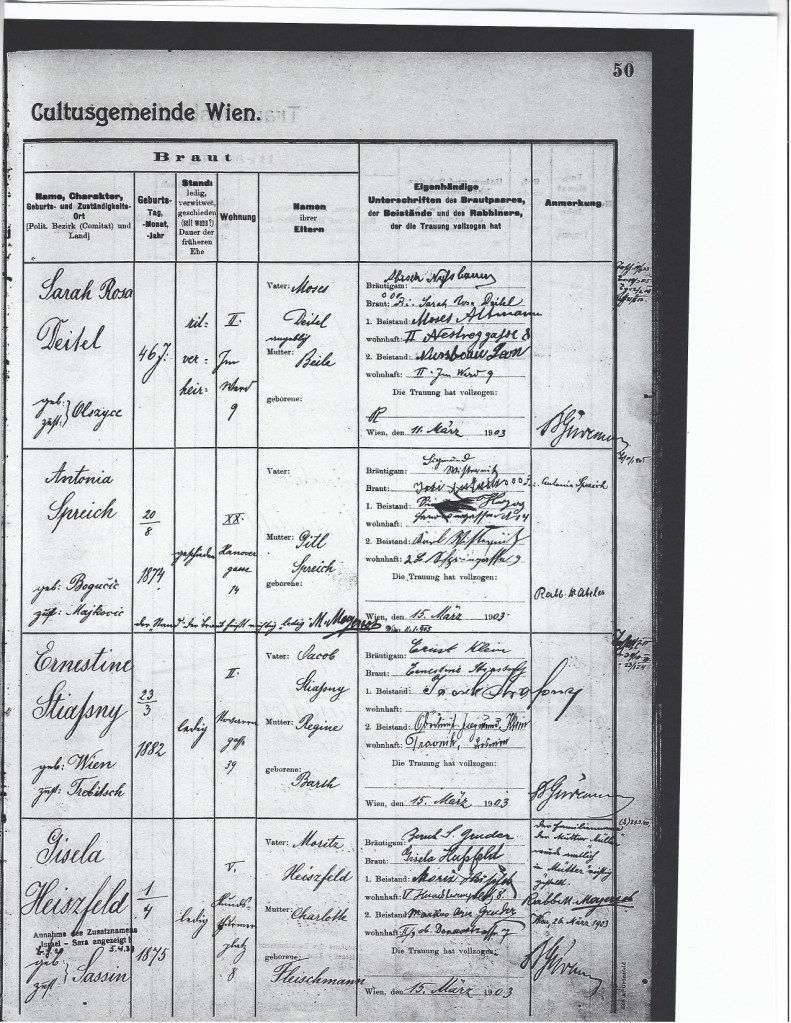
Both Bernhard and Gisela were deported on 10 July 1942 to Theresienstadt, and then on 21 September 1942 to Treblinka where they were murdered that same day. They had a son Felix (born 26 September 1904, an engineer captured by the Nazis in Norway and deported on 26 November 1942 to Berg concentration camp where he was murdered) and a daughter Herta* [ed: see below]
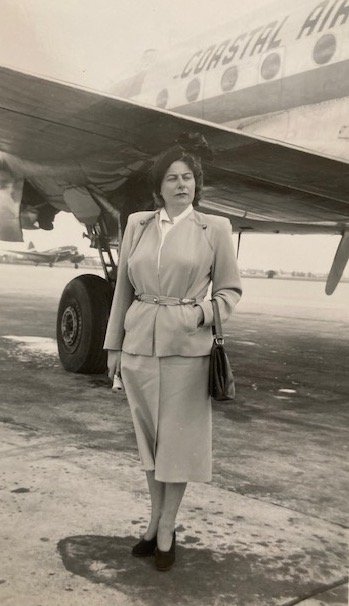
(born 17 August, 1908 in Vienna, Austria.) Bernhard owned a liquor manufacture in Vienna called Haller. Herta made a post-war claim for compensation for the theft of this business by the Nazi regime, which like virtually all similar claims was denied because she could not provide the written evidence of the business or bank accounts having been seized.
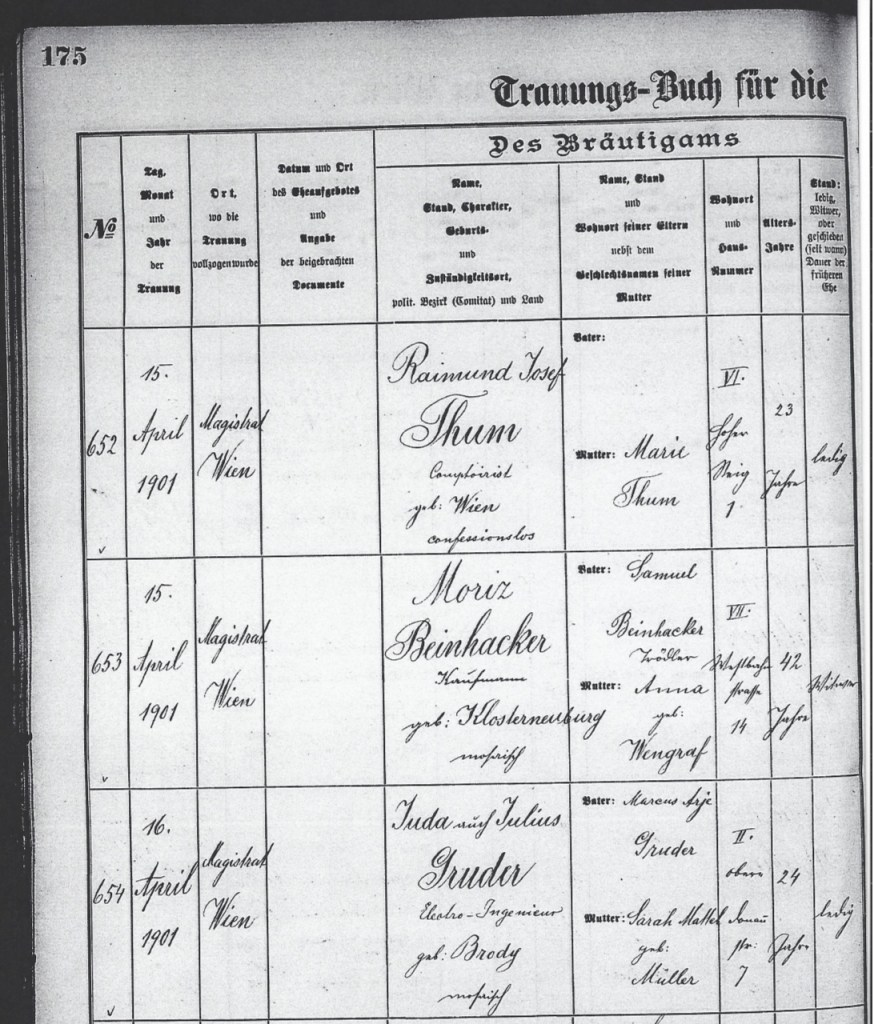
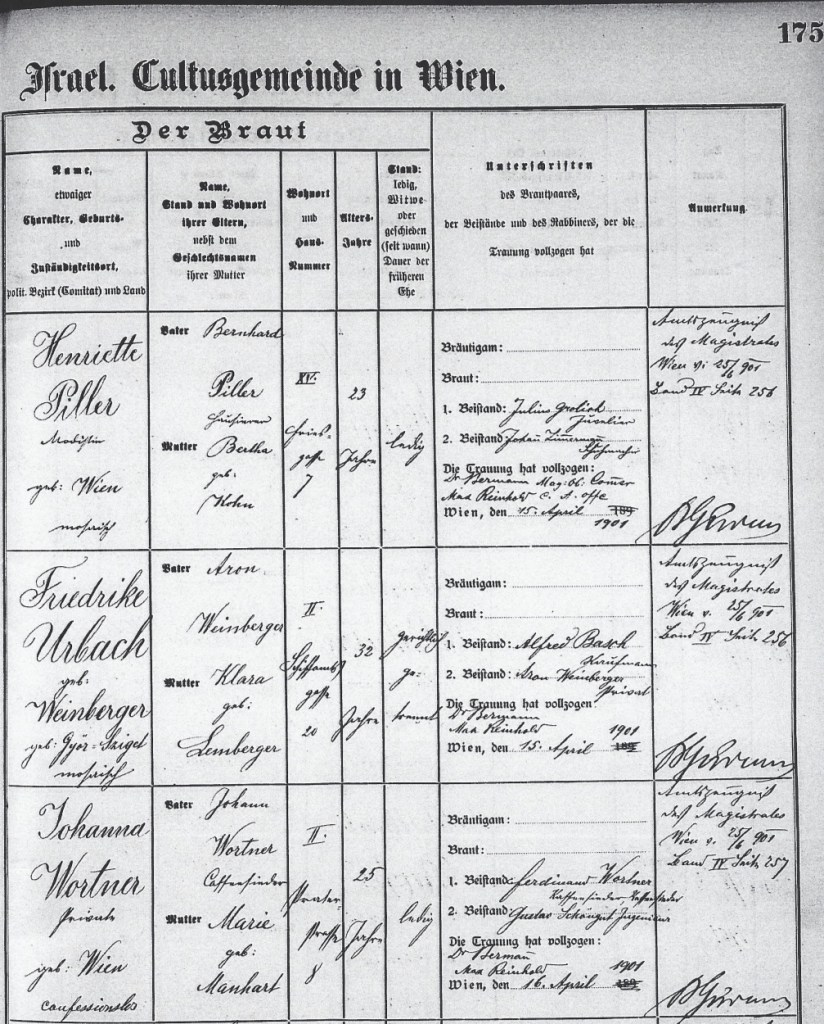
-Julius (Juda), born on 6 January 1877 in Brody (Galizien,) would be repudiated by his wife and children during the Nazi occupation. Interned at Dachau on 24 June 1938, he was murdered on 19 January 1943 at the Internierungslager in Munich.

He was an engineer, lived in Innsbruck, married Johanna Wortner (“Jenny”, a gentile born in Vienna to Johann Wortner and Marie Manhart) in Vienna on 16 April 1901, and had a daughter Helene (dob 9 June 1903) and three sons: Helmut (dob 30 July 1905) committed suicide at 18; another son (name unknown) became an actor; and the third, Edgar (dob 4 June 1902), married Franciszka (dob 1909) known as “Franzie”.
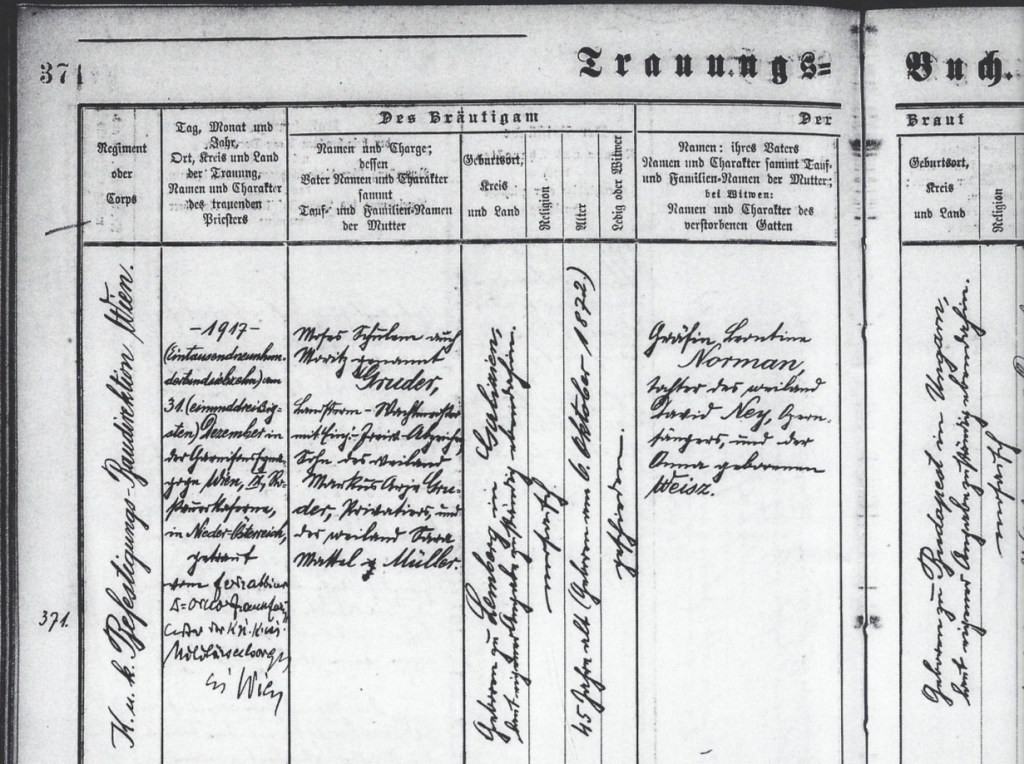
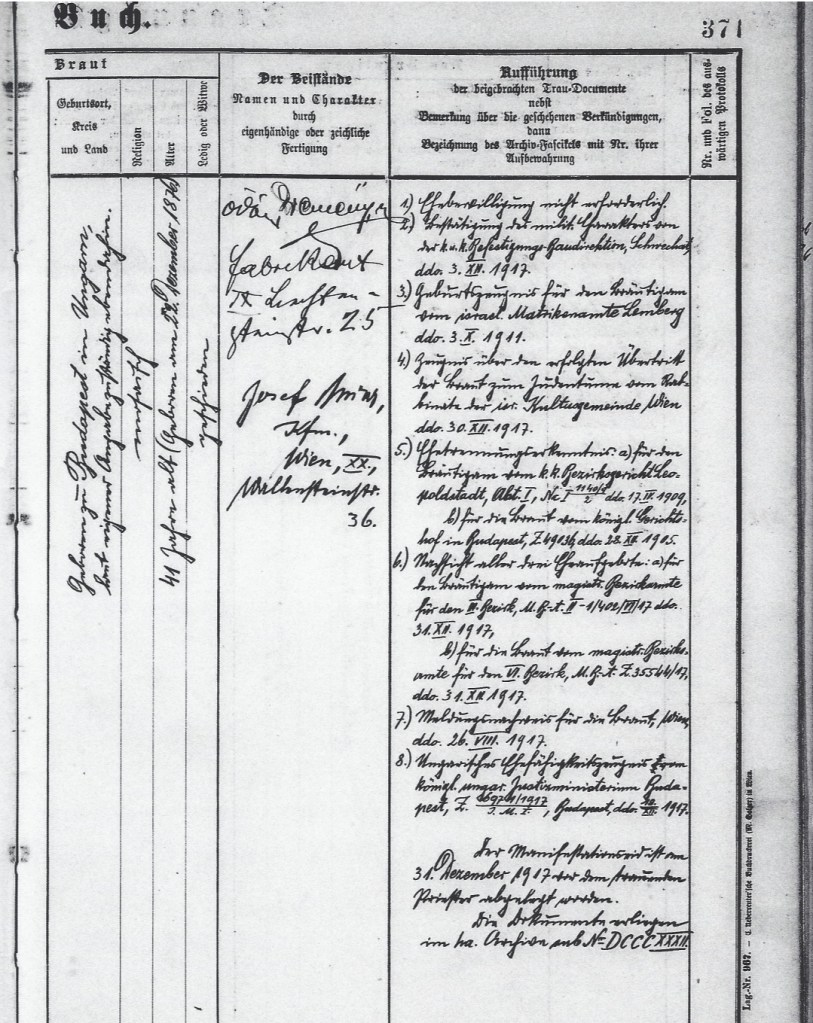
-Moritz (or Moses)

was married twice, at least one of those times to a widow and once on December 31, 1917 in Vienna to Leontina Norman; he had no children.
*Herta and Mac
Herta Gruder and Mac Rose (born Maks Rosenzweig on 8 January, 1903 in Czortkov, Poland) had a coffee shop in Vienna called the “Treuhof”. During the Nazi occupation, Herta and Mac became volunteers in the underground resistance.

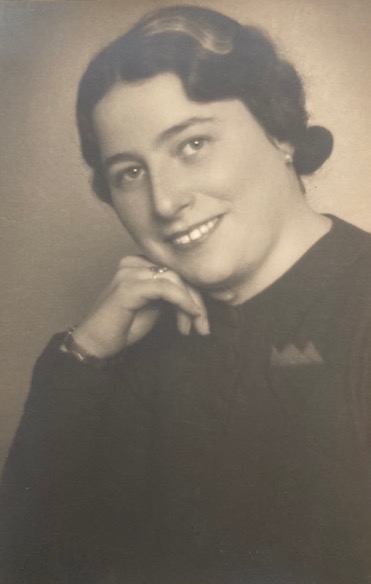
Herta falsified documents to help Jews get exit visas. Mac would present them every morning to Adolph Eichmann, crawling to him and back out of the room again on his knees, never lifting his head, making eye contact, or turning his back to Eichmann. The pair were eventually denounced but escaped – Mac to a Kitchener Camp outside London and Herta to work as a domestic in London during the Blitz. Together they had saved countless Jewish lives.
Herta searched for Mac in England until she found him, and they were married in London on Aug. 25, 1940, eventually emigrating to the U.S.; she had a long career in NY as a buyer for B. Altman and died in Washington DC April 13, 2004.
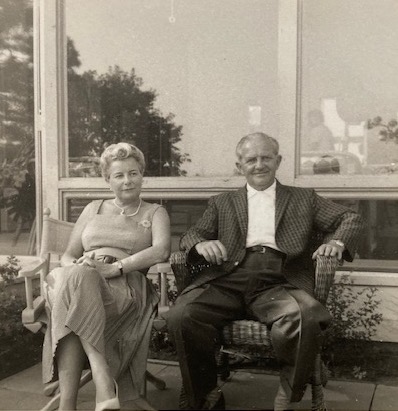
Ignaz graduated from the KKII, Staatsgymnasium in Wien, II Bezirk, in the late 1890s and obtained a doctorate in laws from University of Vienna on 28 June 1906.
Cicilia and Ignaz married on 9 May 1909 in the Ottakring Synagogue in Vienna. They had twin boys, Viktor and Friedrich, born 25 February 1911 in Vienna.
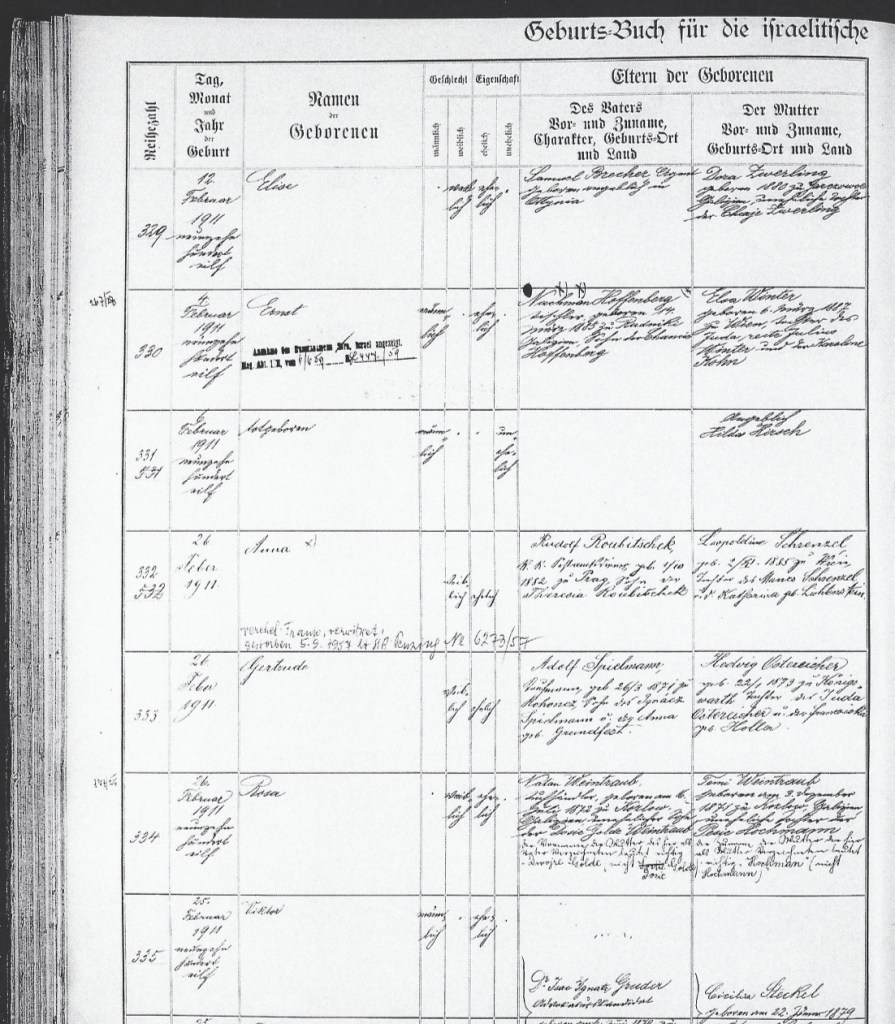
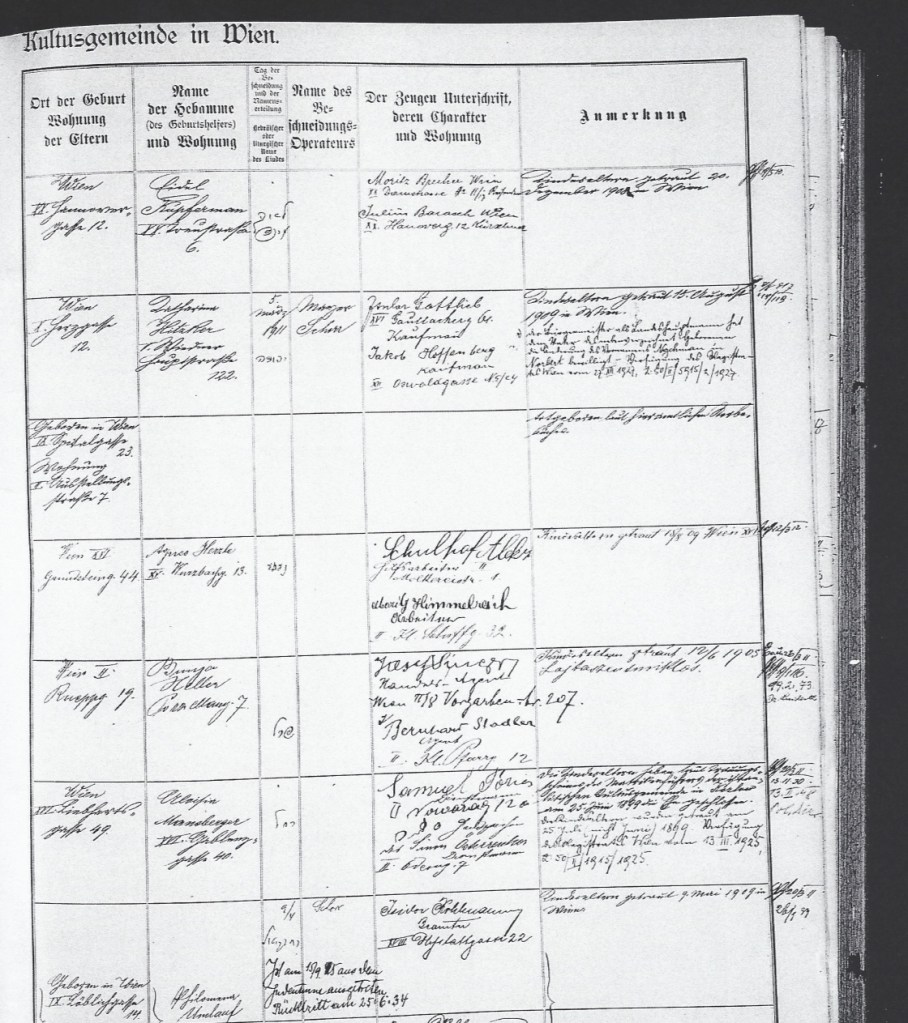
Friedrich died on 21 March 1911.
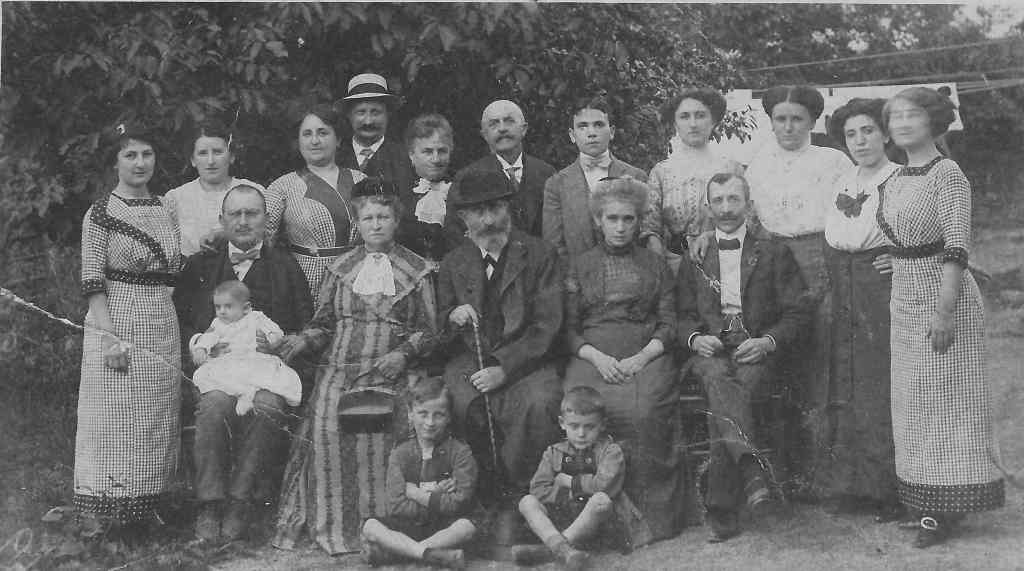
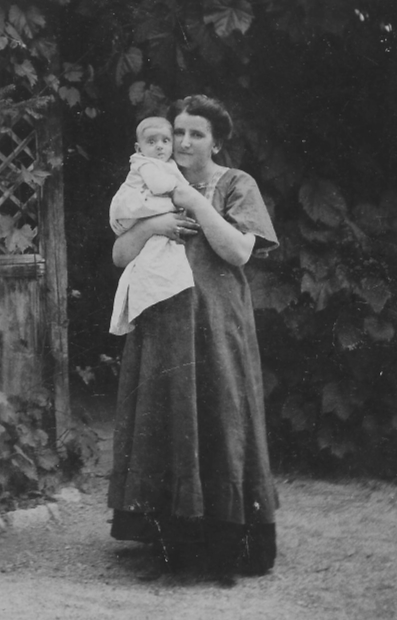
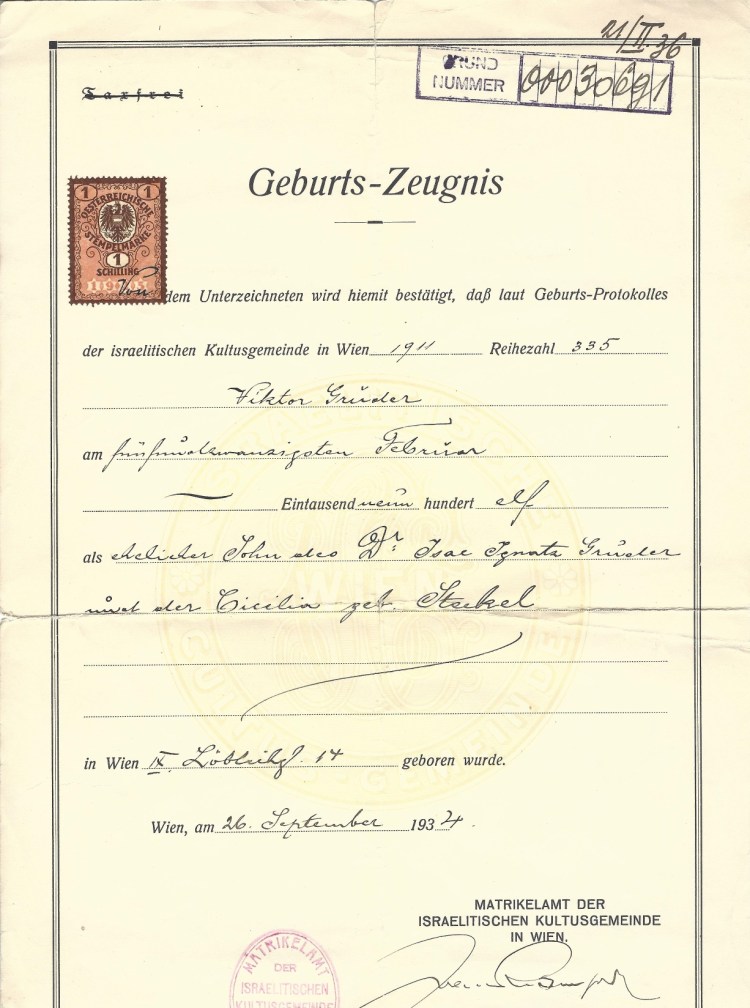
Ignaz’s career took a pause for his military service from 1914 to 1918,
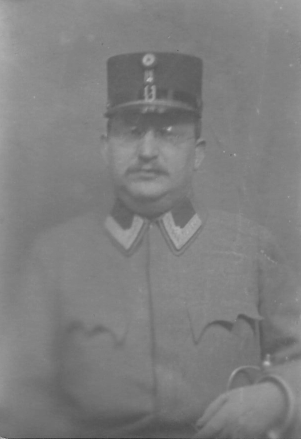
during which time Cicilia raised Viktor alone.
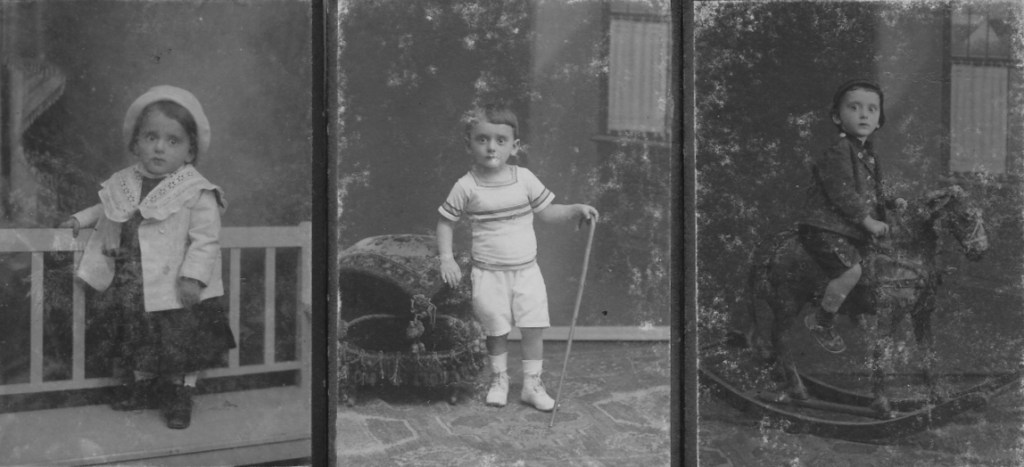
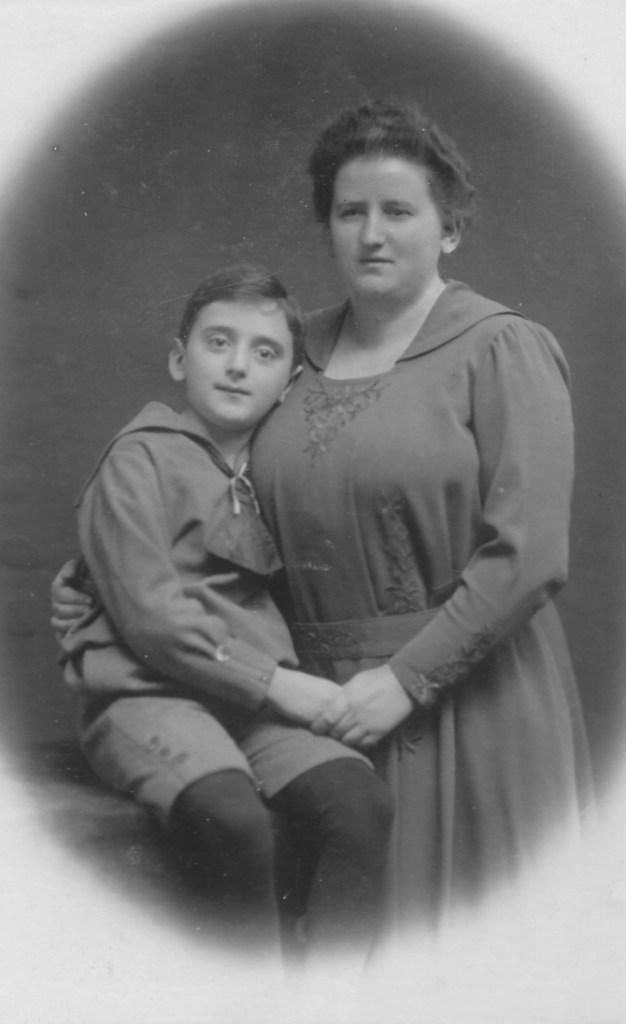
With the exception of this four-year military service, Ignaz ran a law practice for many years from his apartment in the 1e district at Nibelungengasse 1, (III Stiege, II Stock, Tur 46.) He was a lawyer for the Social Democratic Party of Austria (SPO), president of the Austrian sport and fitness workers’ union (ASKOe), an OddFellow, and a district councillor in Vienna from 1927 through 1932.
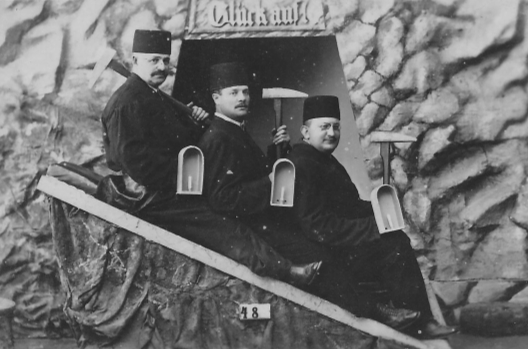
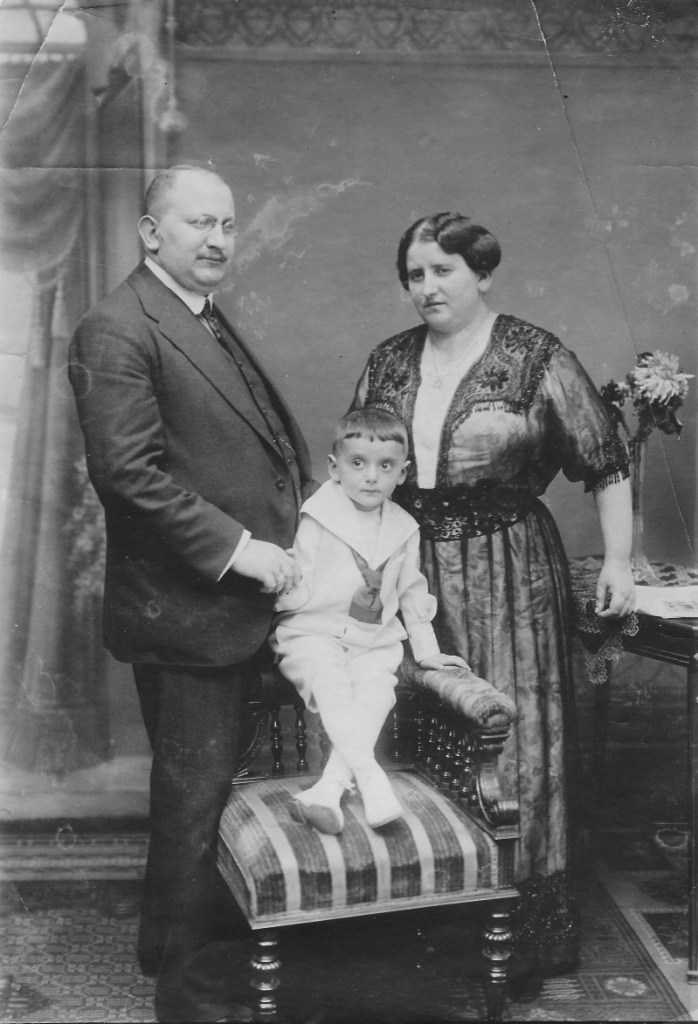
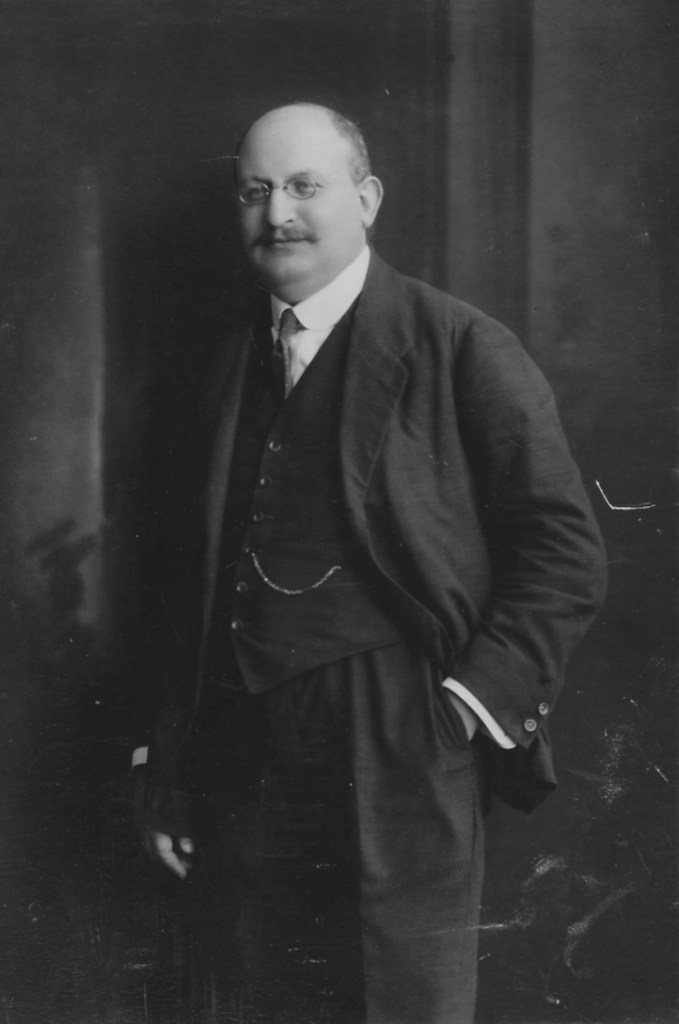
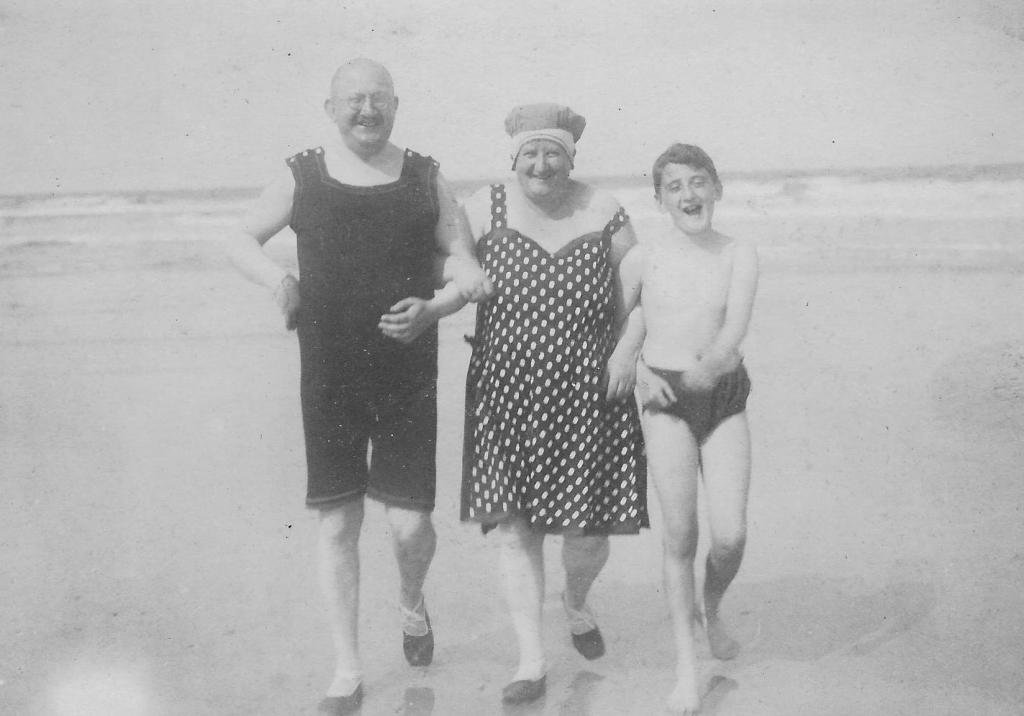

Like his father, Ignaz was a freethinker and the household was fiercely secular. From 1925, when Viktor turned 14, on he was identified in his school reports as “Konfessionslos,” that is, non-denominational.

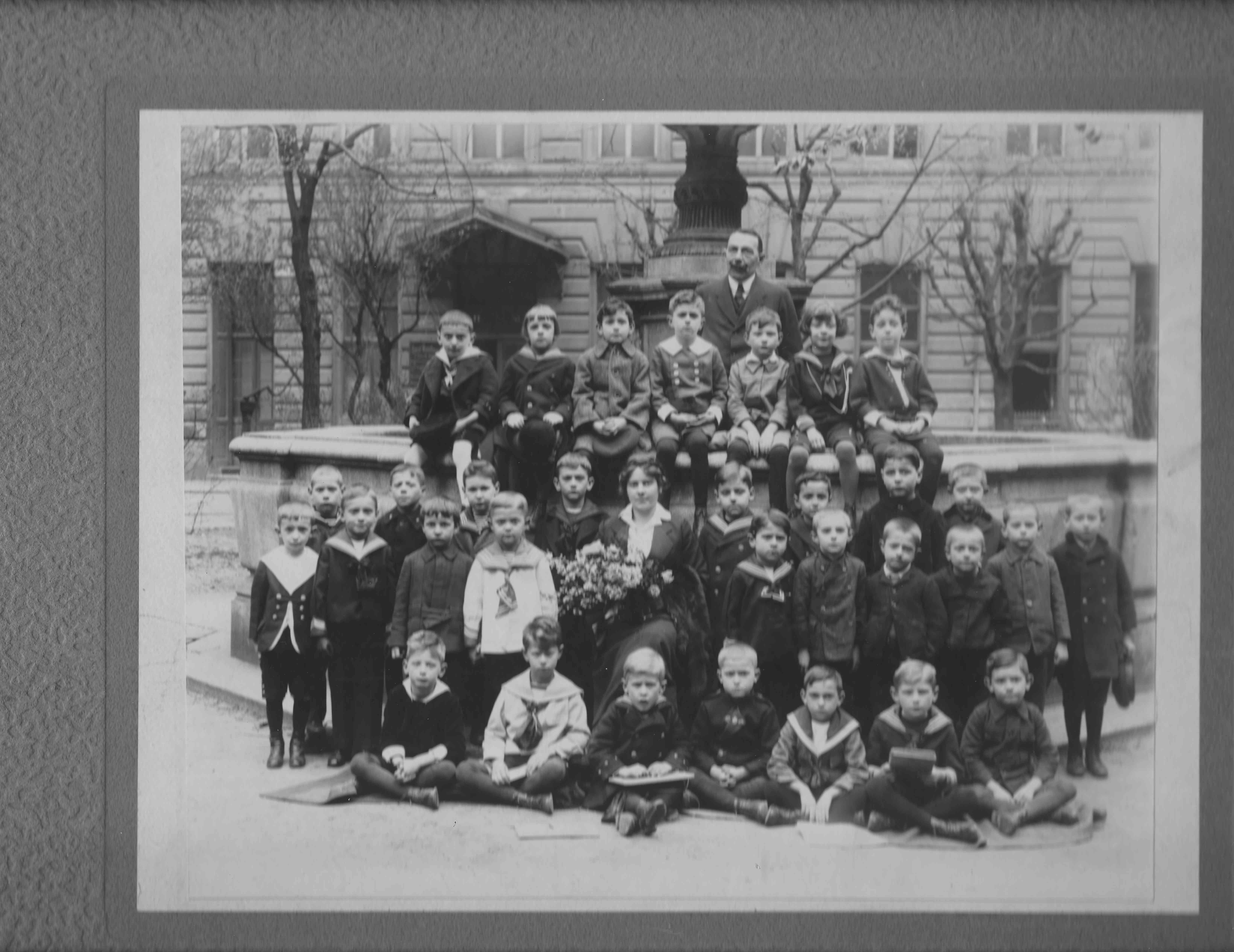
During these years young Viktor, who was not impressed by the Social Democratic Party or politics in general, turned his interests to music. At school he was surrounded by friends who intended to make their careers as musicians. For years as a young teenager, he attended the opera every evening during the 10-month season in Vienna and, at the age of 18, began organizing musical evenings and political cabarets in his parents’ apartment, hosting up to 120 people twice a month. [Ed: see “Viennese Refugees” for photographs of two of the concerts.]

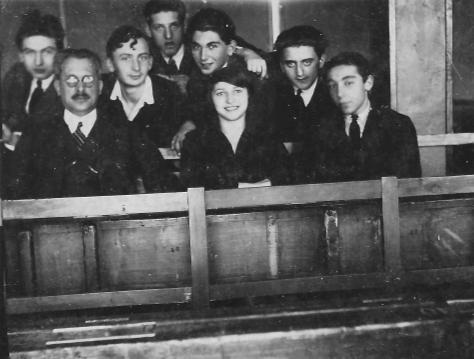
So, I told them in Viennese dialect which, thanks to eight years in a school in the workers’ district, I spoke perfectly well….
Viktor Gruder
While not enthusiastic, Viktor attended law school and worked as an assistant and paralegal in his father’s law practice.
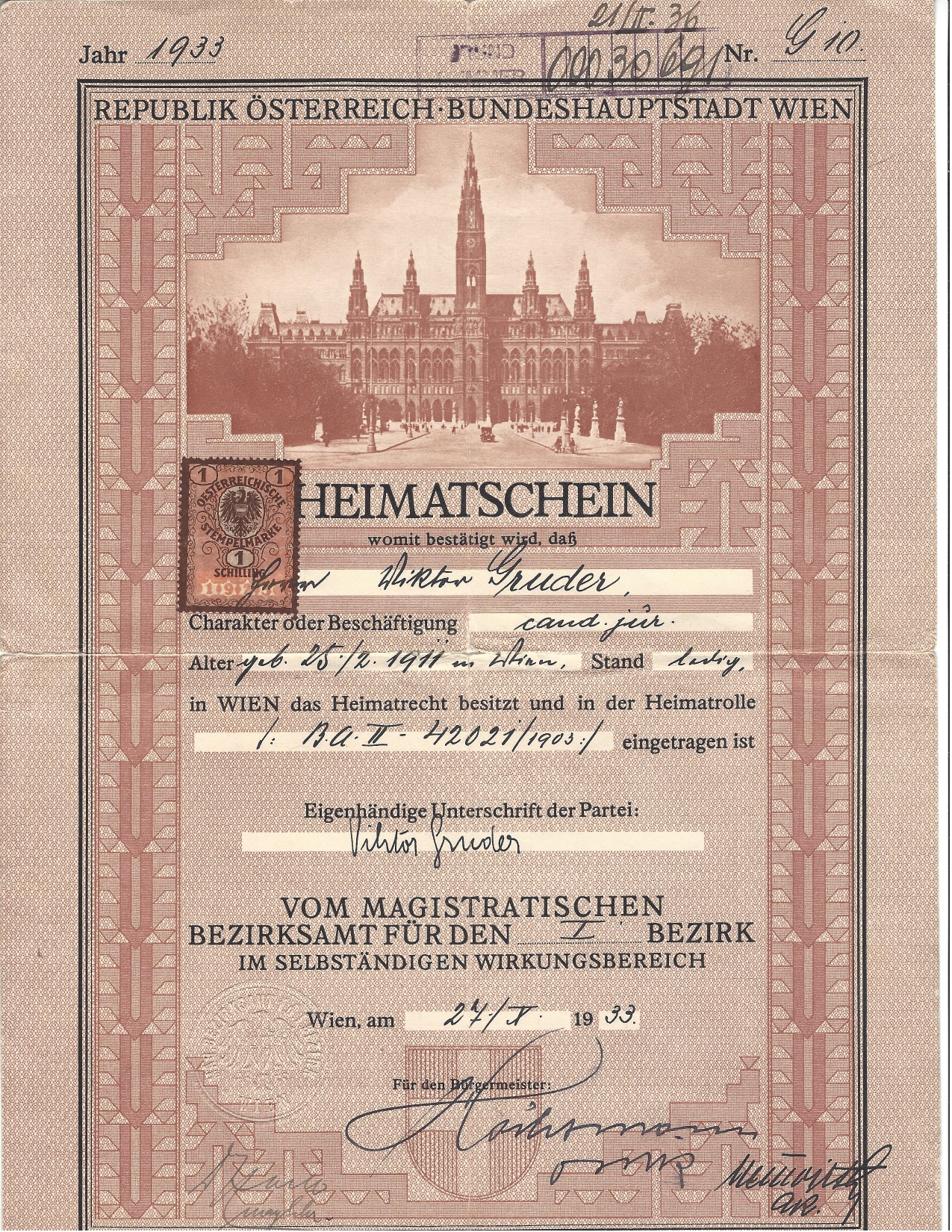
 Victor Gruder