Above you will find a digital copy of Cassette 5A, recorded by Victor Gruder. What follows below is our best efforts at transcribing the contents of the recording. Occasionally, an informal translation or editorial aside is inserted in square brackets ([ ]) for clarity or context. Anything underlined is a hyperlink. As with the title of each “Letter”, they are our addition, and we deserve all blame for incorrect statements or assumptions.
……
Mommy meanwhile returned to the States where she has been with you. We are today the 8th of May and of course much has happened. After Mommy’s return I learned that she has not told you much about her life in Vienna and eventually we’ll remedy this. I played what I have so far recorded for her. Poor thing. She had to listen to six hours of cassettes. Well, she at first thought that I should’ve done this chronologically. You know, start with infancy and proceed from there. However, I think in the end she agreed with me that it might possibly gain in interest by jumping around as I have done.
Having heard a lot together with her, I realize a number of things. I would like to make a few observations. There is a good deal of repetition in it, but it doesn’t pay to wipe it out because that just complicates life. Just bear with it while I repeat the story already previously told. What amazed me was very particularly one, dealing with my father, who asked for a pass to the unoccupied zone, and I told this story not only twice, obviously at different times, but I told it twice in exactly the same words — literally the same words. I find that rather interesting.
A few items deserve post-scripta which I shall try to make on this tape. But before I do this let me say that there is one thing I shall not talk about. I will not talk about any women other than Mommy that I have known. This is not a matter of pudeur [modesty]. It is a matter of principle. It disgusted me when I read Rubenstein’s account of his youth, an account replete with names of his innumerable conquests. What a tactless and pointless thing to do. I think intimate relations between people are a private affair. Writing about them might be possibly justified when they add something to the dimension of the portrait of a great artist, et encore. I no longer can admire Rodin’s sculptures as much as I did before, that is before I knew what a terrible bastard he was when it came to his relations with women. Or biography in general. Does it add anything to Michelangelo’s greatness to know that he was a homosexual? Does it detract from it? Well, at any rate, there is not going to be any chapter on that subject.
A post-scriptum, however, is indicated on the subject of your grandparents. I told you about my father’s family, but not about my mother’s.
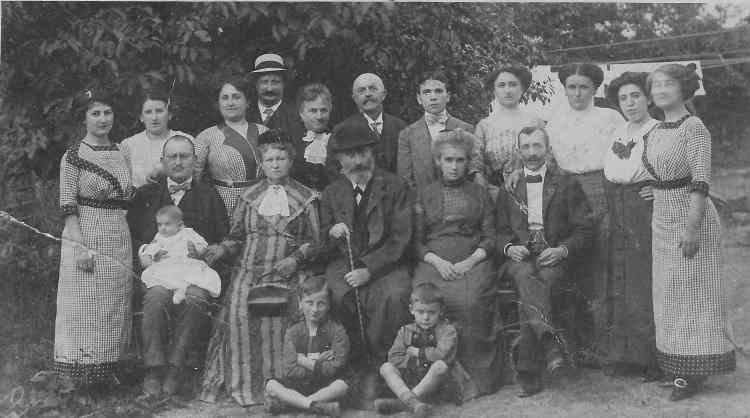
She had four sisters and a brother. All but one were married, and neither they nor their husbands did arouse any particular interest in me. The unmarried one, Laura, was one of the lame ducks in our household. She was very much an old maid, another great light.

One sister immigrated to the United States and she’s the one who sent me (very reluctantly, I must say,) the affidavit which was necessary for my visum to the United States.
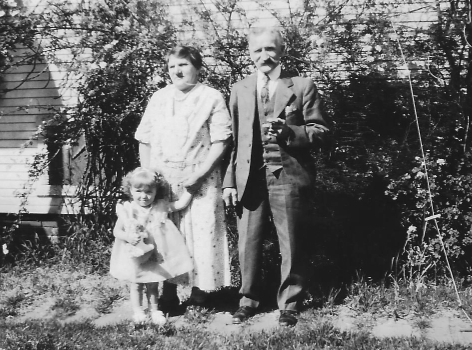
I’ll tell you about that one later. One sister, Bianca Brüller, had a son Arthur, five years older than I, and he was an early playmate of mine.
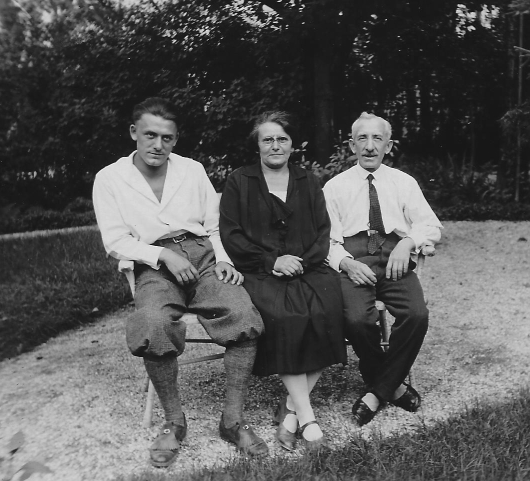
Later he did a stage as junior attorney in my father’s office – after my father, incidentally, had paid for his law education, for his university, his studies – and Artur turned out to be one of the most despicable bastards I knew in my life. Not only did he lure my father’s clients to his own practice after Father’s health had declined, he was unscrupulous professionally.
When my father was starving in Montauban and I could not send him any money from the States (not having earned any,) I wrote to Artur who had a flourishing practice in Buenos Aires where he’d emigrated. He answered me that if I would go less often to the movies, I would be in a position to help my father myself. Obviously, he didn’t send any money to my father. I never spoke another word to him. Once when I was in the army, he showed up in New York and called Mommy. He visited my father who, as I said, had supported him through law school, and he didn’t bring him as much as a cigar, but he tried, instead, to make a date with Mommy. Well, after the war he had to leave Buenos Aires (at least, according to the Gollmanns,) because the District Attorney was on his heels. He reopened a practice in Vienna, and I don’t know whether he is still alive, but really don’t care enough to find out.
All of my mother’s family, with the exception of my Aunt Genia who lived in Los Angeles, died either before Hitler or perished in concentration camps. I know for sure only about my Uncle Bernard, my mother’s only brother (ed: Salomon David Helfenbein, who indeed died at age 27, between the wars), and Laura, the unmarried one. Both (ed: Ignaz’s brother Bernard and Cicilia’s sister Laura) died in concentration camps.
More about your family. I mentioned Herta Rose’s father, Bernard. Her mother was called Gisela (in Vienna one pronounced that “Giséla,”) and, besides Herta, there was a son, Felix.
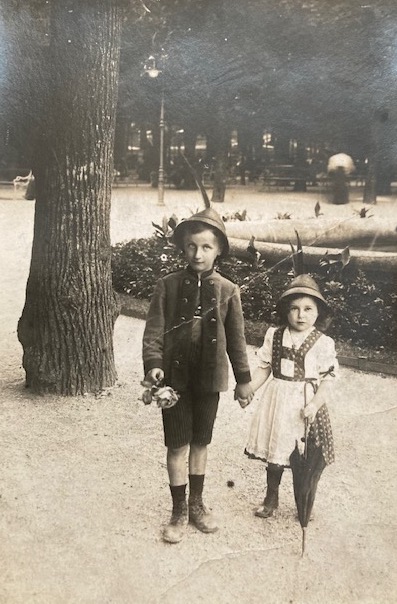

Felix was about six or seven years older than I, was an engineer, had worked a year in Russia and after the Anschluss he came to Paris, and from there he went to Norway to escape the inevitable arrival of the Germans in France.
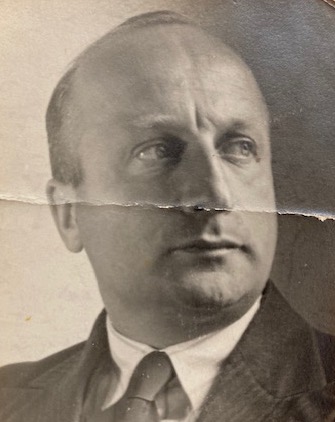
Well, unfortunately, they caught him in Norway and he, too, just as both his parents, perished in a concentration camp. Herta has always been very close to him. [ed: see “Origins, Childhood, and Education” for a brief description of Herta’s heroism and life.]
I told you earlier that I did not know how old my mother was when she came to Vienna. Well, I have since found a photo of her as a nineteen-year-old girl and that picture was taken in Tarnopol – that is, in Galicia. Since there is also a picture of my father dedicated to her in Vienna in 1904, she must have been anywhere from nineteen to twenty-three when she came to Vienna, which then was the capital of the Austrian-Hungarian Empire, and that included Galicia, a part of today’s Poland. That means both my parents were Austrian.
Remember I told you earlier that my mother rented part of our apartment to produce income and one of our boarders at the time of the Anschluss was Georg Gollmann? He and his wife were divorced and after the war they remarried. But that is another story, and I don’t know whether I will get to telling it.
Let me make a few addenda to my war stories. I mentioned that after having left Normandy, we moved to Etampes and in Etampes we had pitched tents in the kraut fields that the Germans had planted. But I think I mentioned that we were able to use the washrooms which had been built for German female soldiers. It had been built by the French (who had to pay for it) but according to German instructions. Imagine a very large washroom with dozens of wash basins and, since it had been built by the French and for girls, there were dozens of bidets. But the American GIs obviously had never seen a bidet and, as a result, there appeared one day a sign, which was placed very prominently over the row of bidets, on which was inscribed over the signature of the Kommandant the following unforgettable inscription: “These contraptions are not toilets. You are therefore directed only to piss in it.”
My sleeping quarters were on Boulevard Rochechouart or, rather, in the neighborhood of Boulevard Rochechouart, and located in a former large department store. I very frequently slept over in town but when I did return to my bunk, I had to do so by passing Place Pigalle. Now, Place Pigalle, called Pig Alley by the GIs, was quite a sight at the time. You had the impression that there were American soldiers lying in the gutter at all times. Actually, there were only once in a while one or two, but uniforms are highly visible so the appearance was that American soldiers are all drunks, which was not entirely untrue, but they were not used to the kind of hard liquor that was obtainable, which was Calvados, generally. And yes, when they went to Place Pigalle there were many who were lying in the gutter, picked up by the MPs and, in a very fatherly fashion, taken to their billets.
As you would expect, in Place Pigalle, besides GIs, upright or prone, depending on their state of ivresse, there were of course also the ladies of easy virtue and – en masse – and that led to an experience I fondly remember. You know, I must explain. I wore, obviously, an American uniform but having had to deal with all sorts of French brass, I was allowed to wear no insignia of rank. I was merely a staff sergeant, but I dealt with generals so to make that easier, no stripes. I merely had a U.S. insignia at the collar and that’s the only thing that distinguished me from French soldiers who also wore American uniforms but didn’t have the “U.S.” on their collar. I was standing at one corner one day and observed, or rather listened to, three French whores talking to each other. I was intrigued, learning a bit about aspects of a world I knew not much about, and at one time they said, “Oh oh, there come three GIs,” and they disappeared behind, in, a doorway. When they came out, I was intrigued by this behavior and said in French (obviously in French,) I said, “What do you have against GIs? Aren’t they nice?” They said, “Oh, yes. They’re nice. They’re just big children.” “Well, why did you avoid them?” I said. They explained to me the following fact of life: GIs at that time — with the exception of a few hundred actually stationed in Paris — otherwise all the GIs you could see were frontline soldiers on leave for a few days in Paris and obviously they were living it up. You could see them in the cafés, and under their short Eisenhower jackets they had in the back pockets of their tight pants one or two bottles of Calvados sticking out, which they drank in dismal cafés around Place Pigalle and other such places. And as the girls explained to me, they would select one of the ladies and retire with them to do what these ladies set out to do, and would return then to their drink, keep on drinking and after a length of time the same guy would select another lady and move upstairs with her. And so on. I don’t know how often, but apparently there came a moment when with the third, or what have you, lady the purpose of his visit could not be consummated. Now normally these ladies let themselves be paid in advance and, as they explained to me, the guy was too drunk, it didn’t work anymore, and he wanted his money back. Well, laughingly, I said, “What do you do? Give it back, do you?” They said, “Of course you give it back to him. He’s got a big 45 gun on him. But since you never know when you are going with GI whether you are the first, the second, the third, or what have you, and whether it’ll work out and work out fast enough, we prefer in this neighborhood and at this hour, not to accept GIs as clients.” I find the idea of the guy who, because the marriage wasn’t consummated, asks for his money back, absolutely priceless.
Talking about prostitutes triggered another memory, an addendum to my account of the days when I was a guide in Paris. At that time, in 1937, there existed many reknowned maison-closes. The more chic and expensive ones excelled in discretion and guests would arrive and depart without running into each other, but there were also some which more regularly resembled brasseries. Guests would sit at tables, drink and ogle the ladies who, in various stages of undress, were attempting to induce prospective clients to sample, well, their wares, as it were. Some of the places were famous and in one of my earlier tour groups, I was asked about it by some man and would I take him there? That of course also intrigued wives and solo girls in the group and please, please, would I take them there? Well, I made it clear that I was not going to be known in Vienna as a guy who takes his group to an excursion to a bordello however, eventually I relented and said I would accompany them, as their guest and as a safeguard against being taken by the place. Well, we went, and everybody was sitting down, drinking beer or other drinks which were very cheap. And everybody remained a mere drinker and looker, and if anybody had any designs to know the inmates more intimately, he must’ve returned on his own later. Well, we left and after a visit with my first group, the sous-maîtresse (that’s the term technique for the lady who runs it,) called me back and discreetly handed me an envelope which contained my commission. She was extremely puzzled when I declined. Obviously, I missed my chance to become a pimp.
Before leaving the subject of my glimpse of this world of Toulouse-Lautrec, I’d like to flesh out the subject, if I may use that term, by relating one more experience. This was before the opening of the World’s Fair. I was still completely broke and wrote my letters and things in a café. (A café could cost next to nothing at the time.) And once in a while I would have a bite in the then-existing charcuteries which served sausages and other things, warm and cold, and were open all night. And at one time I walked into one just as a young lady walked out. I looked at her because she looked familiar, and she looked at me and she says “Jo, du. I bin’s!” [“Yes, you. It’s me!”] I must interject here that living where I did in Vienna, that was very close to the Kärntner Strasse and the Kärntner Strasse was a place where Viennese whores plied their trade. And whenever I came home from the Opera, or from taking somebody home, and went through the Kärntner Strasse I saw these girls and after many years of this I, of course, knew them all by sight and they knew me. Well, this lady in Paris was one of the women I had recognized, and she had recognized me, and the shock of hearing in good Viennese dialect, the statement “Jo, du. I bin’s”, was quite extraordinary. Before I could open my mouth to reply, she said “Bevor ma irg’ndwos aunders redn, sog dem, wie Wirschtl’n auf Französisch heiß’n!” [“Before we talk about anything else, tell him what sausages are called in French!”] I complied and told the man — I ordered the frankfurters for her — and after that she suggested that we go to a café and have a talk. I made it clear to her that I was pretty broke, and she said that doesn’t matter, she’ll pay for both of us. She was kind of puzzled that I didn’t accept that. And we finally went to a café and went Dutch, and I learned to my astonishment that there was a whole brace of five or six Viennese prostitutes who had come to Paris for, because business was promising during, the World’s Fair. And there was a contingent that didn’t speak a word of French but apparently plied their trade successfully in Paris. I saw some of them in the café. I was not considered a client, but a friend, and they were so anxious to have somebody to speak German to — Viennese to — that I saw them quite frequently, almost every other evening, and learned a lot about the view of life from that side of the fence. I think this covers exhaustively the subject of prostitution, of prostitutes.
And I’d like now to make an addendum on something serious and not anecdotal. A rather complex subject. I believe, again having listened to what I have said before, that I conveyed the impression that I was not attracted or inspired by socialism. More than that, I said so. And I must now correct it because historically — or perhaps less grandly I should say chronologically — what I said is incorrect. Not only did I grow up in a socialistic environment at home (but due to youthful impatience, I criticized Austria’s, and for that matter Germany’s, Socialist Democratic parties,) there was no other basic philosophy thinkable for me. I had been weaned on recognizing communism, that is the Communist Party, not as an incarnation of but rather the antithesis of socialism. Thanks to what I heard at home I was inured to the communist cant. To this day, I can recognize a professional communist. I know the record, and it takes only a few sentences to know what he’s up to.
You know, in my student days that wasn’t all that self-understood. Russia at the time was a new, still new, experiment in applied socialism and it was rather fashionable for young intellectuals to flirt with communism, to read literature from Russia, and to sympathize with their goals. Mind you, one didn’t know anything about, what one later knew about, Stalin. And it was by no means easy not to fall for the promises, for the idealism, that seemed to imbue at least all the communists outside Russia. And we knew absolutely nothing about Russia except what they wanted to let the outside world know. However, I was luckily spared that particular excursion into communism although many of my friends were sympathetic.
What happened in that respect was the fact that the Austrian Social Democratic Party was quite different from the one in Germany. The Social Democrats in Germany were indeed a state, bourgeois, political party which lacked drive, which lacked revolutionary zeal, and which was undistinguishable from other center — centrist — parties. Well, the Austrian Social Democrats were what one today would say far more radical, they were more to the left, and perhaps therefore there never was a communist party of any consequence in Austria since the foundation of the republic in 1918. The Austrian Communist Party never gathered more than a small percentage of the vote. And on the first of May there was a big parade by the Socialists with tens and tens of thousands of people and that took place in the morning and almost invariably in beautiful sunshine. And the Communists demonstrated in the afternoon, invariably it rained, and rain or not there were only a handful of people. So, this is a pattern, incidentally, which hasn’t changed in Austria (although I recently read that thanks to Kreisky’s excellent management of the government, the Communist Party had no success whatsoever in Austria. That is historically incorrect. It wasn’t due to Kreisky. There never was a Communist Party in Austria that amounted to anything,) while in Germany the Communist Party represented a truly revolutionary force, they opposed the growing Nazi Party, and opposed them in street fights. They were also of course the first target of the Nazis when they eventually came to power.
I felt it necessary to set the record straight because, obviously, at the age of — when I was about 20 or so — one had of course a basic philosophy, political philosophy, and if earlier I said that I had my doubts about the Social Democratic Party, I was actually projecting backwards what I had learned only later.
My disillusionment with the Social Democratic Party can be dated. It was during the 1934 semi-revolution. No, that’s the wrong word again. During that uprising of, this little war between the rightists and leftists, the rightist Heimwehr of Dollfuss and Schuschnigg and the armed arm of the Social Democrats during that period in 1934 which culminated in our arrest. It was at that time that I realized that the dedication of the rank-and-file socialists in Vienna wasn’t as great as I had thought. The idea was that a general strike should have been declared, was declared, and the signal for it was the shooting, and work was supposed to come to a standstill. Well, it didn’t. The people stood around. That is, those that were not engaged in actual street fighting, stood around and waited to see what the outcome was going to be. That was the first disappointment. And later, when the Nazis came to power (that is when Hitler marched into Austria,) it turned out that all these Viennese workers, a two-thirds majority of Social Democratic workers, had illegal party books of the then-illegal Social Democrats in their left pocket, and then-illegal party books of the Nazis, equally forbidden, in their right pocket, because one never knows how things will come out and this way — therein — was safety for the future.
Now that really turned me off and it is from that day on where I realized that the international solidarity – never mind international, that the solidarity between workers merely because they are workers — is bunk. There is no such thing. It’s self-interest and that’s the leitmotif. And when the Nazis came to power in Austria, all these beautiful Viennese Socialists were just as anti-Semitic as the Nazis were. In something like one week the number of cruel acts against Jews was as great as if they had to catch up with what the Germans had been doing in several years in Germany. They had to catch up quickly and they managed that very efficiently. You know, there was a statement by Fritz Kortner, the great actor and a friend of ours, who really detested the Austrians. And there is a saying by the Viennese, very proud of the fact: they have a golden heart. “Das goldene Wiener Herz.” And Kortner found that very typical. He said it’s the only people he knows that is proud of having a heart made of metal.
What I’m talking about are these petty acts of cruelty. Imagine, there were things written on the sidewalks in chalk — anti-Nazi slogans from the time before Austria had been gobbled up — and the Nazis forced some old Jews on their knees to clean up such signs, such slogans, with a toothbrush. There were two or three young Nazis standing and prodding them and a large audience grinning, laughing, and finding the spectacle very funny. That much for the golden Viennese heart.
Where did I stand after this disillusionment with the Austrian Socialists? We were in Paris. It wasn’t my country. I was a great admirer of Léon Blum, but France was not exactly a model democracy at the time. I saw it from its worst side because France, which was then not governed by a socialist government (the Front Populaire was a matter of the past,) and the behavior of the French vis-à-vis all the refugees who came was indeed nothing admirable. I did admire Roosevelt, as did all Europeans I know. I admired the New Deal and knew, obviously, very little about it but, whatever we did know struck us as most constructive.
What did I become? I would have described myself as a liberal. I still had no use for nationalistic movements, was not attracted by Zionism, I had sort of abdicated on organized socialism such as social democratic parties in Germany and Austria – they were ineffective – and I guess a deep conviction in the institutions of democracy was one of my guiding ideals and the other one was liberalism (but not in the economic sense, but rather in the sense of liberal thought.)
But why I am saying all of this is because I feel the urge to make a rather curious point. You may have heard me, particularly lately, describing myself as an ex-liberal. Yes, there have been things that have turned me off. In the welfare state there have been things which made me agree with some conservative expressions. But I must confess that basically one doesn’t change because all I need — after having declared myself an ex-liberal – all I need is to run into a truly died-in-the-wool conservative, a reactionary, and it brings out in me all the opposition that I could have felt in it as a flaming socialist. It doesn’t have to be somebody who is today thinking that Nixon was a great president; it doesn’t have to be that extreme. But whenever I listen to the rightists – no, it doesn’t have to be a rightist – to the conservative credo, be it the Christian Democrats in Germany or be it Mrs. Thatcher in England, it arouses in me feelings which I had thought I had given up. What I have given up are the illusions, but a pragmatic social democracy, such as that in Germany under Schmidt (or for that matter under Brandt,) or that of Kreisky in Austria, would make it very easy for me to vote for them if I were a citizen of their country. I certainly can’t see myself voting for their opposition.
Now, enough addenda and post-scripta. I shall attempt to return to, what should I call it, the story line. Alright. I last left you at the French consulate in Bern where Viggi Kalmus and I, or rather I, got my visum for France. We proceeded to Paris and what happened there you will find on — by turning the cassette to the other side.
 Victor Gruder