Above you will find a digital copy of Cassette 1B, recorded by Victor Gruder. What follows below is our best efforts at transcribing the contents of the recording. Occasionally, an informal translation or editorial aside is inserted in square brackets ([ ]) for clarity or context. Anything underlined is a hyperlink. As with the title of each “Letter”, they are our addition, and we deserve all blame for incorrect statements or assumptions.
………………
There we were, the two only men in the place, Schrafts, in the afternoon, full with women at the various tables, and Bill holding forth that I should give up at that silly business of being a waiter and should study even if it means that Mommy would have to support the household. In the meantime – and I’m telling him that it doesn’t make any sense to change at this stage when I am going to be called up for the army any moment now — and you know, his loud, professorial voice carried.
And then something very touching happened. A lady sitting alone at the table one removed from us, during a lull she bends over and says, “Excuse me gentlemen, I couldn’t help hearing what you gentlemen were taking about. And I just cannot contain myself, young man,” she said to me. “Your friend is absolutely right.” And she started to persuade me, too. Whereupon two other ladies sitting elsewhere also chimed in. They too participated. I had a whole phalanx of people talking to me. But anyway, the upshot of it was that I did go and look for a job as a room clerk in a hotel. It still didn’t make any sense, as far as I could see, to engage in studies — studies of law, of all things — at that stage. But I gave up being a waiter and became a room clerk in the Lincoln Hotel on 8th Avenue in New York, in the Times Square neighborhood. And I remained in that job until I finally was called up, considerably later in ’42. As a matter of fact, I had to report to my induction post on, sometime in December 1942. I believe it was in December.
With that began my life in the Army. My basic training, I told you already a bit about that. I won’t go over it again. During the whole year I spent in the States in numerous camps, at two occasions Mommy was able to come and visit me. I remember the first visit, which was very strange. She arrived by train in Raleigh while I was, I believe, in Fort Bragg. It was very strange. We had been separated for many months and there was a need to get reacquainted. We felt shy with each other. That lasted for at least an hour or so. I remember she came very early in the morning. I was in uniform. I think it was the first time she saw me in uniform. And as we walked arm in arm from the train, an officer came by. I saluted him. He returned the salute and said, “Good morning.” Mommy, very nicely, also greeted him by nodding her head, and then asked me, “Do you know him?” Well, I eventually managed to explain to her that a soldier does salute officers. No, I think really what caused her to ask the question was that the officer, seeing a solider with, obviously, a lady – either his wife, or fiancée, or what have you — on his arm, I think he actually saluted first or some such thing. Anyway, he smiled and that apparently gave her the idea that I must know him.
As a matter of fact, army ranks have remained a mystery for your mother throughout the years to the end of my career. And only when we were, much later when I was a civilian working with higher brass, I persuaded her (since it was dangerous that she would address a colonel as major,) I told her to call everybody colonel, which she did. As a matter of fact, she did it even to generals, of which the most amusing story is one that happened much later in military government in Germany, where she went to the commissary. At that time, you could only get whatever the commissary was able to obtain. That was very often nothing at all. Very poor meat and the only way that meat could be made edible was to stew it, for which you needed onions. Nothing to be had in the German market and no onions in the commissary. But every so often there was a circular being given out in which the housewives were told how good they had it in the European Command and where they even told them that you could get three bottles of ink for the price you would have to pay for one in the United States. But how many bottles of ink can you buy? Anyway, Mommy was livid. She was pregnant with you at the time and once more she goes to the commissary and sees a huge supply of Clorox along the walls but no onions, and nothing here really usable. And there is a tall officer surrounded by a number of other, deferential, officers and he, quite obviously throwing his way around. So, Mommy walked up to him and said, “Colonel, do you make one more inspection and you’re going to tell us once more how good we have it by being able to buy cheap ink. Why don’t we have any onions?” To which he very politely said, “Well, lady, you will have to write to Washington for that.” And Mommy, irate by now, said, “Well, what’s your job, boy? Why don’t you do that?” There was great snickering all around as she had addressed him as colonel, and as she checked out a grinning cashier smiled at her, and she said, “Who is that new colonel there?” He said, “Well, that’s the Air Force Commander for Europe.” He was a four-star general. As a matter of fact, we met him much later when he had retired, in the house of the Pisers – it was a neighbor of theirs. I related that story to him, General Smith.
One other time Mommy was able to visit me in Evansville, where there was a barracks arranged for married soldiers who could get a pass and receive their wives only every so often. Before you could check in there you had to produce a marriage certificate, the only time we ever had to do that. Most hotels took our word for it.
And then, finally, shortly before going overseas, I was in a camp near New York, near enough to return home on days in which we were finished early, provided that you took a taxi back at five o’clock in the morning. We shared the cost of a taxi – that was quite a racket, arranged by some clever fellows. Four or five got together and took a taxi into town and made arrangements for the taxi back in the morning. The last of these outings was shortly before Christmas, I believe the 22nd of December or 23rd. At any rate, I was looking forward to spending the 24th, the evening of the 24th, at home. Mommy was making a duck or a goose. But we no longer could get out of the camp on that day because we were, actually, alerted to go overseas, and that duck never got eaten.
Shipping out was also an eerie experience. We were on a converted – I think it was the Isle de France, converted into a troop ship, which means many more bunks than normal circumstances. And we were a convoy of — I no longer remember how many but numerous ships — twenty, thirty ships surrounded by some destroyers looking for German submarines. I didn’t know German submarines because we were not told whether we were going to Europe or to the Pacific. But, anyway, my instinct was that it would be Europe although, leaving it to the army, being trained in European languages, it was par for the course to send such people to Japan. But anyway, in our case, we were sent to Europe, and we were followed by two submarines which were seen on – it wasn’t radar or screen as one knows it today — but by some devices they knew that there were some German submarines following the convoy. And it was an eerie feeling of not knowing whether we were going to be blown out of the water or not, but we made it — arrived in Liverpool, as it turned out, by Nacht und Nebel. And by God it was Nacht, and by God there was Nebel. [ed: literally, “night and fog.” This is a reference to Hitler’s chilling “Nacht und Nebel” directive of 7 December 1941, which was intentionally named after the “Tarnhelm” spell in Wagner’s Rheingold.]
We were taken on a British train to a place where we woke up in the morning in one of the loveliest neighborhoods I’ve ever been. But the British had removed all road signs and signs that gave the name of the city, so it was not so easy to find out where you were. It later turned out that it was in Broadway which, I believe — I’ve never been back, but I believe it is in Somerset. Anyway, lovely, rolling, hilly, green country, and that was my return to Europe. I told you already a lot about what followed then, and we’ll skip over to something entirely different.
Taking a breather before resuming some semblance of continuity, it occurred to me that this was a good point at which I could give you what I will call a time capsule. Once when you were a small child, I mentioned that I went to school in Vienna with a trolley car. I think I told you this when we were already in Paris. Obviously, you had to be old enough for such a conversation. And I took a trolley car, may have called it “tramway,” as we did in Vienna. And you said, “What’s that?” and that is when I had the first inkling that I have lived in a time span where certain conveniences of life were so very different from the time in which you were born and I’ve never forgotten that. It occurs to me that it may give some perspective to review some of the things which for you are history but perhaps, by talking about them, I may place them in their proper time.
I remember in the house of my grandparents on my mother’s side, the illumination of the room was assured by petroleum lamps. You know, the ones that you buy nowadays at the flea market as antiques. We ourselves had, in our first apartment in – that I remember – in Vienna (which also was in the First District, but closer to the Schottenring) we had gas lustres which you had to activate by, with, a match to get a very soft, agreeable light. But electric lighting came later, and I no longer can tell you when.
The bath tub — the bath water — was heated by, first, a coal stove and the stove in the kitchen was a coal stove. The coal was kept in the cellar and the maid carried what was necessary for the day, carried it up. In our second apartment in the Niebelungengasse, the one you know of, we had an elevator, but not in the first apartment where we lived until I was about ten years old or so. (No, it was later – twelve, fourteen years old.) We lived in the Helferstorferstrasse. There was no elevator. There were trams in Vienna at the time as here, but there were also trams in Paris at the time when I came for the first time at the age of fourteen with my parents. There were still tramways running.
I remember the advent of radio as it entered daily life. It began with little sets which were called crystal sets because you had to — as a matter of fact the same principle is still being used in airplanes to change frequencies. I think that’s what it is — the crystal, and you had to set a needle on the right place of the crystal in order to get reception by a headset. Then we acquired our first radio that no longer needed a crystal but operated on dials, and I have a vague recollection that it was frightfully expensive. I no longer know what it, how much it cost, but it cost a fortune and we were one of the first in our circle to have a set like this and my parents invited all their friends to listen to transmissions from the Vienna opera. This goes back to, what, late 20’s, I guess.
Gas lanterns on the street didn’t disappear for a long time. And as a matter of fact, before World War II, the Place de la Concorde was still lit with gas lanterns, not so much because electricity didn’t exist but that was for effect, and it was a very beautiful soft light. It is, I think, only after World War II where this completely disappeared simply because each one of these lanterns had to be started by a man with a long stick and he did something to set it off. These men were lampistes, and the lampiste was to daily life what a triangle player is in an orchestra.
As far as the conception of morals was concerned, all of Western Europe and Central Europe — and Vienna always was the last outpost of western culture – was very much influenced by Victorian thinking. There were many things not talked about, particularly such things as sex or sex education. This reminds me of a very amusing story, that my father was very proud of the fact that he was a liberal thinker and in my presence he boasted at several occasions that he had given me — Sexuellaufklären was the German word for it — introduced me to the facts of life and that he had done it by once taking me into a stable while we were on summer vacation somewhere in the Austrian Alps. And he had taken me in and shown me a goat with her husband apparently in action and that this was his way of introducing me to the facts of life. Well, I can assure you that it had made no impression on me whatsoever. I only learned through the tales of my father that this was supposed to be my introduction to the facts of life which, like everybody in my generation, I got from my colleagues in school, with various inaccuracies and with smirks and grins and very rudimentary conception of the mysteries of life.
And it reminds me, my father’s story with the goat reminds me of a beautiful sequence from a book I like very much by Rezzori where one of the characters, faced with the situation that a young boy had to be introduced, had to begin the facts of life – he was selected because he was a favorite uncle of that boy; this happened somewhere in Romania, Hungary – and he took the boy and said, “Do you remember I took you on our last hunting trip? We enjoyed ourselves very much and after the hunt, we had a big dinner, and remember all these pretty waitresses who came around and everybody had lots to drink, and then we frolicked, and you remember what we did with these waitresses?” The boy very eagerly says, “Yes, indeed!” He said, “That’s exactly how the birds and the bees are doing it.”
However, don’t make any mistake about it. Whatever exists today, existed then. There was as much fornication, as much teenage pregnancy, as much adultery as there is now. There was pornography. But it was all kept in the closet. And one was secretive and mysterious about it.
As a matter of fact, I am not entirely sure that when the pendulum swung into the opposite direction, as in our time today, that one element perhaps got lost and that was just the mystery. That was about the only redeeming feature of the hypocrisy that existed in that area. As a matter of fact, the task of a parent to introduce a child to the mysteries of life, to the facts of life, is still a very difficult one. When to do it, how to do it. Well aware of the fact that one should answer questions truthfully but, perhaps, not more, not go farther than what has been asked. Just to answer questions. That’s a very difficult problem. I know we faced it with you. There were occasions when I attempted to talk about it, and you turned it off with an abruptness. It was a mixture of shyness. You didn’t want me to talk about it. You were embarrassed to hear me talk about it. So, I usually cut off the conversation.
That reminds me of a cute thing that happened when you returned with Constanze Lorenz from England, and we lived in the Rue Chalgrin. As you remember she is a few years older than you are. And you saw some of the prostitutes, standing downstairs, and the two of you asked Mommy while I was in the office, “What are these ladies doing down there, just standing around, talking and talking? Who are they? What do they do?” Mommy, taken completely unaware, sort of on the spur of the moment said, “Well, they probably live in one of the maids’ rooms upstairs which are not spacious, are not very agreeable. So, they are standing downstairs. Their husbands may be away in the army, and they just talk to each other because they have nobody else to talk to.” And I believe Constanze observed that they are far too well dressed to live in the maid’s room upstairs. And Mommy related that story to me when I returned from the office and I told her, “Why didn’t you tell her the truth?” So, a few days later, I took the occasion to bring the conversation around to it. I made it clear that these are ladies who are willing to be companions to lonely men in Paris, who take them to a restaurant or go to the theater or to the movie together, and they are getting paid for these services. This answer satisfied the curiosity of both you girls.
Another illustration of rapidly, or exceedingly rapidly, time changed, and the volume of that which one learns in school – volume and scope – expanded. Not only were Mommy and I not able to help you in school (when you went to in school in France) because it was a different school system but simply because you learned things which were not taught when I went to school. I believe the only area in which I ever was able to be of any assistance was in language, that is in French, or in German. You undoubtedly remember yourself the incident where you had to recite in school, and I taught you, I tried to teach you how to recite a poem. I even remember the poem. It was by Emile Verhaeren, “Le vent de novembre.” You were very hesitant to do it with as much pathos as I put into it. And I remember your surprised face when you came home from school. You were afraid that the other kids were going to snicker when you do it that way, but you apparently had the courage to do what I had told you and you got a particularly laudatory mention from the teacher for it. And I remember your great surprise that Daddy was right.
In the area of medicine, my father became deaf as a consequence of blood sugar because, while one checked for sugar in the urine, the blood sugar tests were not routinely taken, and had it been taken in time, one could have arrested the progress of his diabetes in time, and it wouldn’t have done the harm it did. My mother with her angina, as far as I can remember, got no relief whatsoever. I don’t remember ever her taking pills or nitroglycerine. I don’t know when this kind of treatment became routine. But I do know that she never, to my recollection, took anything.
The social housing built by the City of Vienna, which I told you before was a model for the rest of Europe. However, the early buildings in the 20’s, the apartments, were built without bathrooms. As a matter of fact, you know that your Aunt Lyd had to install a bathtub in her kitchen in order to have a bath. That is not that surprising because the outbreak of the bathing culture, showering culture, in the United States is actually after 1913. Before that time, the majority of Americans did not bathe any more frequently than the British do today, and that is rarely. Since this sounds like a nasty crack, let me clarify. I’m talking about the broad masses of people. What the British call the upper class has different mores all along. Not that they bathe all that frequently, but they may do it as often as twice a week, while the average British worker to this day is taking his weekly bath. People who work at dirty jobs take a shower at the end of the working day at their working facility – coal miners and the like. But otherwise, that was a routine thing in the United States until after World War I.
There is another side to this. Things like Social Security existed in Central Europe. It was actually, it began in Germany. It was started by, most unexpectedly by, somebody who was not at all a great socialist, rather the opposite: Bismarck. And at the end of last century and the beginning of this, there was such a thing as the beginning of social security, and health care paid out of it, in Germany and Austria. At the time when I left Austria, there was such a thing.

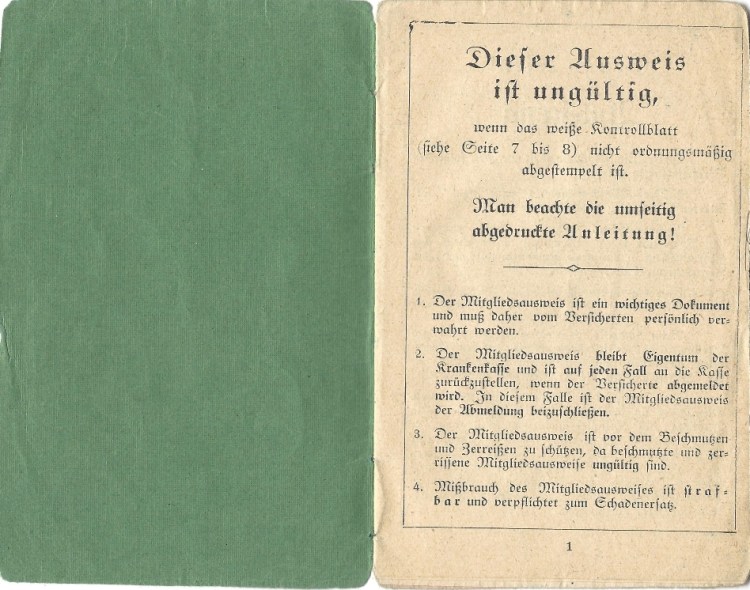
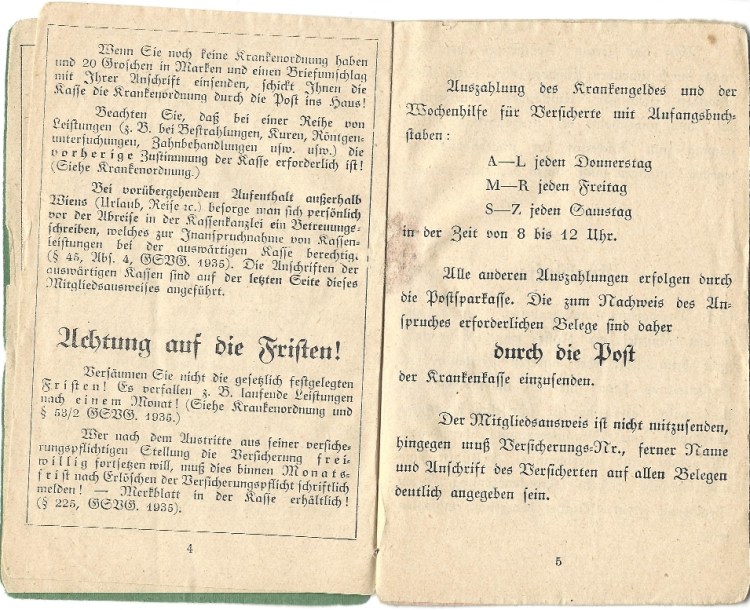
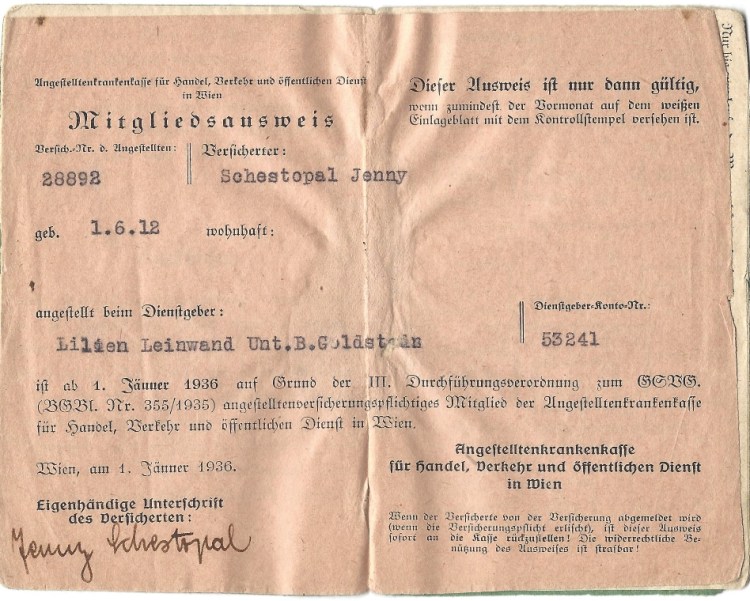
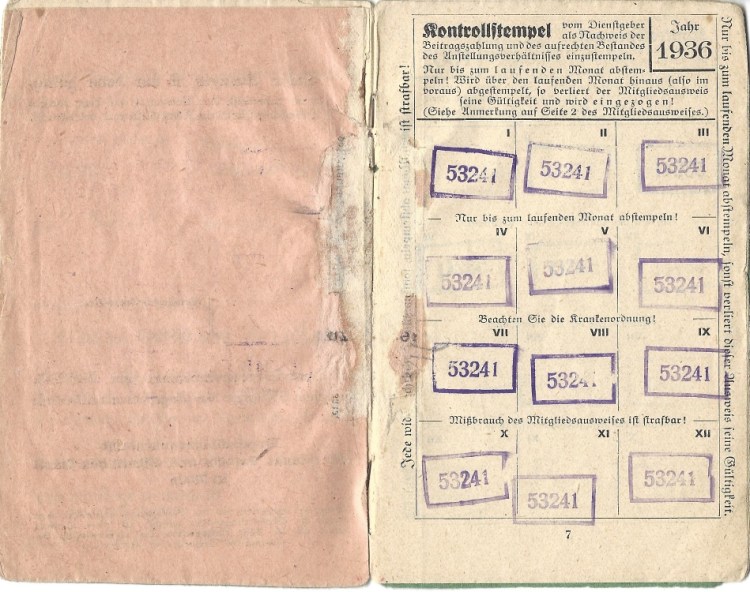
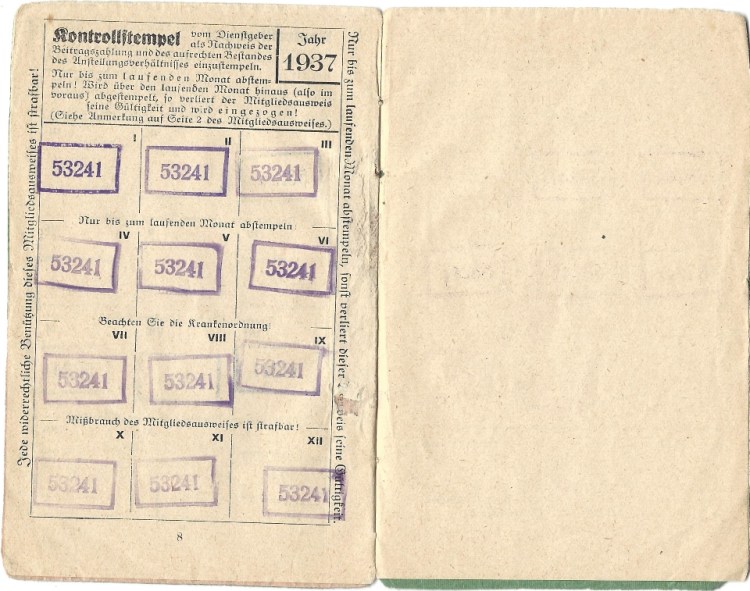
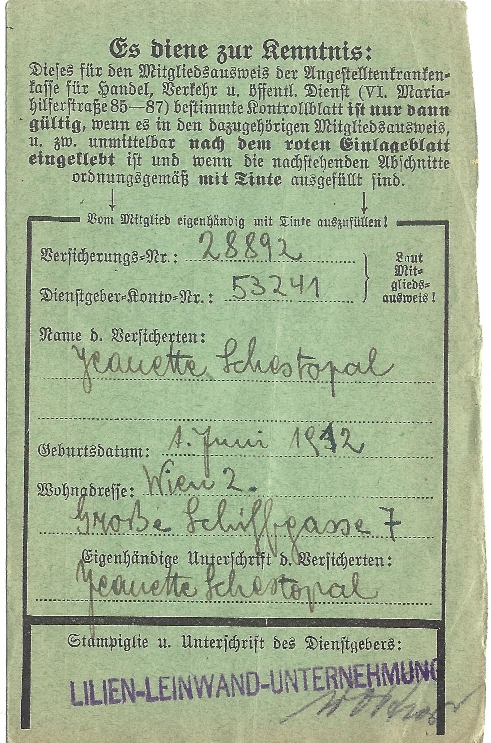
As a matter of fact, you know that both Mommy and I belong to social security in Austria, something which came much, much later in the United States and was practically hailed as a new invention there. Unions in Europe existed long before my time. I witnessed the beginning of union power, of union organization in the States when we got there. It’s as recent a development as that. As a matter of fact, it was Franklin D. Roosevelt who brought the United States into the 20th century as far as social legislation is concerned, as far as the little man is concerned. He is a great champion and that’s his greatness for which he was admired in Europe, perhaps even more than in the States. And it came, one of the great surprises for us was when we arrived in the States to find that there were people who hated him, who couldn’t mention his name and referred to him as “that man in the White House,” while in Europe he was a hero of everybody. He would have won elections in Europe by landslides greater than those that he had in the States.
After this little excursion in H.G. Wells’ time machine, let me return to a continuation of our life, our lives and, perhaps, I best do this by starting with my return to the States after the War. I came back in late November 1945 and received unemployment insurance for a number of weeks (I forgot how many) and I set out to find a job. Of course, I came back with millions of other soldiers and jobs were hard to come by. And I had decided meanwhile to become proficient in English, felt very American, that I would perhaps cash in on my knowledge of Europe and languages and try something connected with languages. And I started visiting airline companies, trying to get employment there, and I made new discoveries. I discovered that Americans do not like to say “no” to somebody who is looking for a job. It was true before I went into the army and later. They would rather say, “We don’t have anything today. Why don’t you come back? Why don’t you call us?” They hate to be, to say “no,” which is psychologically interesting. It isn’t terribly helpful for a greenhorn who doesn’t know better and doesn’t know that this means “no.” I spent some three or four weeks running around to airlines before somebody told me: do I not know that airlines don’t employ Jews? Well, frankly, I didn’t know but it apparently was true at the time or, to be more exact, they didn’t employ them where they would be in contact with the public, at the desk. They did use Jews in the bookkeeping department, what have you. And anti-Semitism was still very rampant at the time. Restricted hotels remained restricted in Florida, even after we had fought the war against the Nazis. It took a good while before Jews were accepted as equals in American society. I can’t date that particular feature of American life, when this emancipation – is that the right word? – took place. But at the time it was not possible to be hired by an airline.
Well, I had, we had always been in touch with the Bratenahls. Lucie, at the time, lived in Washington. That is, Lucie, her husband, and her mother lived in Washington. [ed: Lucie Spingarn was a former girlfriend of Victor’s in Vienna. She married a doctor, Charles Bratenahl, in the United States and they had a daughter called Monica before the Gruders had their Monica. The Bratenahl and Gruder families remained lifelong friends.]
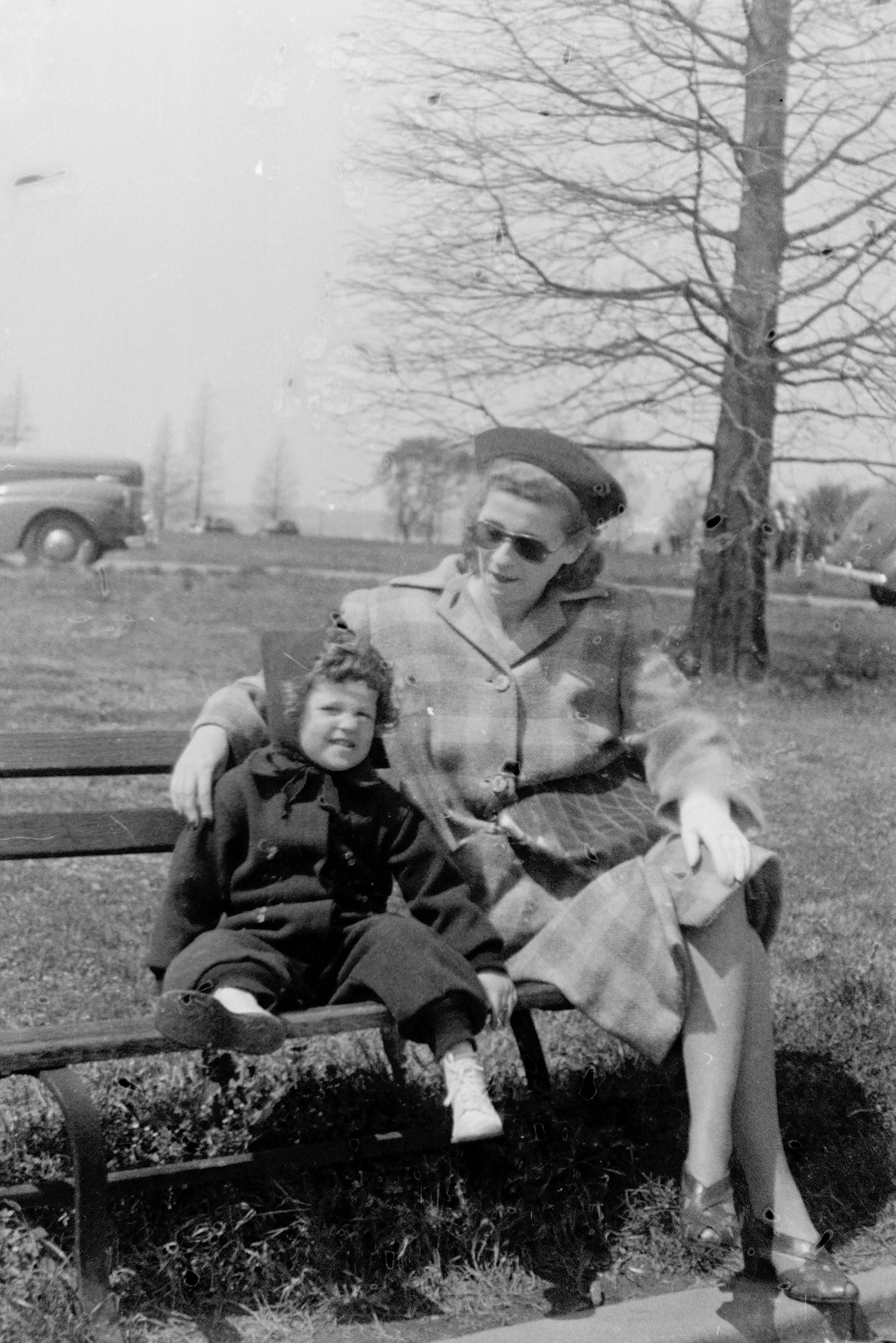

And she, throughout the war, had given language lessons and had among her pupils many people from the State Department. I either had written or telephoned with her and she suggested that, she said she had spoken with somebody at the State Department about me, about the fact that I was looking for a job overseas, and we arranged a meeting. And I went to Washington, saw her, and she sort of tactfully told me that the man whom I was to see had told her he hopes I wouldn’t turn out to be one of those vague Europeans who don’t know exactly what they want, and, with that, I set out to meet this gentleman with that warning. And of course, I didn’t know what I wanted. I didn’t know what was available so, it was going to be a difficult interview.
Well, somehow, we hit it off and he told me that I should go to the Munitions Building which, in the meantime, has been razed, as you know. It was on Pennsylvania Avenue, and I should go, and he gave me a number. It wasn’t quite clear whether this was an office number, a telephone number, or something. He wasn’t quite sure whom I was going to see there and what they were looking for, but it had something to do with hiring and it went on in that vein throughout that conversation. I always had in the back of my mind that he told me, that he had said he had hoped that he wouldn’t deal with a vague European. Well, I have never met an American who was more vague than he was. But I proceeded to the Munitions Building and, lost in the maze of offices and the corridors there, I apparently looked puzzled. And I had a piece of paper in my hand and one kind old gentleman with a GSA uniform saw me. I was still in uniform with my discharge button in my buttonhole, and he said, “Son, what are you looking for?” So, I showed him the piece of paper and said, “I don’t know what I am looking for. I was given this number.” “Well, what is it that you’re after?” I said, “Well, I’m looking for a job overseas. Military government.” He said, “Oh, well, you might want to see Mr. Fisher.” Fisher was a German-sounding name and that sounded right, and I proceeded to the office he indicated on which was marked “Recruitment for Military Government in Japan, Korea, and Europe.” And the head of the office was a Mr. Fisher. Well, I walked in there and there was a secretary typing furiously on a typewriter and I said, “Can I see Mr. Fisher?” to which she gave me the puzzling answer, “Are you a judge?” I said, “Am I what?” “A judge?” I said, “Well, no, I’m a lawyer.” She said, “Yeah, a lawyer. But are you a judge?” Well, I proceeded to explain to her that any lawyer can be a judge, but not every judge is a lawyer. So, she said that’s a little bit over her head, why don’t I wait for Mr. Fisher? I suggested that this is what I had in mind to begin with, and I waited for him.
Well, it turned out that Mr. Fisher was a recruitment officer on loan from one department (I think State) to the then-called War Department for the purpose of hiring people, and he had to fill a requisition for some hundred and forty war crimes judges in Germany. He had written to all forty-eight — at that time there were forty-eight states – forty-eight bar associations for names, and I was the first live lawyer who walked into his office looking for kind of a job for which, which may have been in that field. And from that, with that began an interview — a conversation it was, rather than an interview — which lasted for three hours. He explained that what is needed are people who would sit in war crime trials as judges and that he has several problems with it. Some of the applications he got were from refugees and he was wondering how would a German feel if he were being judged by a former German who was a refugee and a naturalized American? Would they not feel that the cards are stacked against them, and what have you? Well, I ventured my opinion that I had been in contact with Germans, German prisoners of war, and I had observed that what impresses a German most is proficiency, that they were most impressed with the fact, when we interrogated them as prisoners of war, that we spoke German as well as they did. It never occurred to them that we were immigrants, that we were refugees. Goebbels had never told them that. I expressed the thought that Germans would, before a judge who speaks their language, probably feel more comfortable than having to rely on translation. Well, that was just one of the things that we discussed. As I said, it went on for three hours, at the end of which I asked whether I had a chance to be hired. And he told me to fill out a form, the first time I had seen such a form, and send it to him from New York. I did ask if I would be hired, would I be able to take my family along? Yes, indeed. But I never did ask him how much the job would bring, how much salary I would get.
 Victor Gruder