Above you will find a digital copy of Cassette 7A, recorded by Victor Gruder. What follows below is our best efforts at transcribing the contents of the recording. Occasionally, an informal translation or editorial aside is inserted in square brackets ([ ]) for clarity or context. Anything underlined is a hyperlink. As with the title of each “Letter”, they are our addition, and we deserve all blame for incorrect statements or assumptions.
………………..
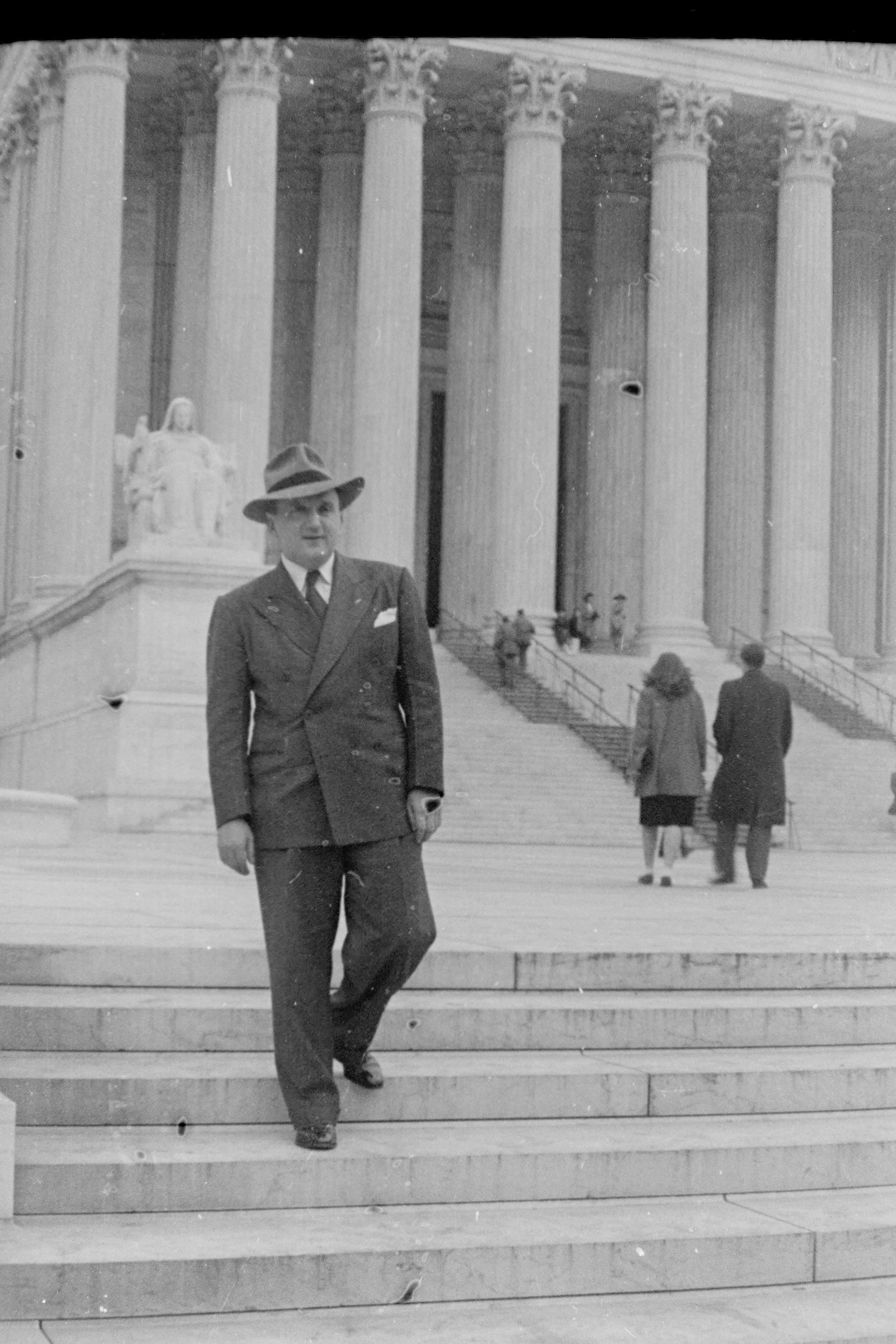
Before leaving Mr. Fisher, I asked him what my chances were to be hired and he said, “If the references you are going to send me bear out the impression I was able to form, I will be glad to recommend you.” And I then, tactfully, asked whether that was the end of it. He said, “No, the selection is made by a committee, however, in the last seventeen years the committee has never rejected any recommendation I have made.” And I assured him that was good enough for me and, very elated, I took off for New York and filled out my application. Now, one of the things on the application is “Below which sum will you not accept appointment?” or words to that effect. “What’s the lowest sum you are willing to accept?” And since I hadn’t asked him, I called Washington and he said, “Well, put in there P5.” “Thank you.” And I put in P5 and then frantically asked all my friends in New York, “What’s a P5?” Well, nobody knew. P was a professional rating and a P5 at that time was a GS-12.
Well, only a few weeks later, I got word that I was accepted and at the salary of a P6, which was a GS-13. Mr. Fisher, very kindly, had given me credit for all my European studies and I had a grade which later turned out to be higher than that of colleagues in the same job who had left the army in Europe and civilianized — horrible word — became civilians in Europe. My orders designated me as a war crimes attorney and I was to report to the personnel office in Frankfurt, the personnel office of military government of the War Department. I was told that my family could not follow immediately because there was no housing ready for dependents, but it would not take very long before Jeanette and my father could follow me. The salary was absolutely fabulous for my then standards. I unfortunately do not have my original contract, but I believe the salary was in the neighborhood of some eight thousand dollars which was, as I said, more than I had hoped for.
And I proceeded in June 1946, once more with the Isle de France but this time no longer a troop ship, to Le Havre and on to Frankfurt. We wore American uniforms but, instead of a grade, it said “U.S. Civilian.” Since the whole program was administered by the War Department (it was thus a military operation,) the civilians had to be given a comparable rate, or comparative grade, so that for purposes of priority in airplanes, trains, and what have you, some rank system could be maintained. I had the comparative rank somewhere between lieutenant colonel and colonel. While I was on my way to Frankfurt, I stopped in Paris, saw some of my friends. There was great hilarity among them that I had returned as a colonel because, like all GIs, I had never failed to express my views about officers. They all found it very funny that I now was a colonel.
I stayed in Frankfurt for only about 48 hours, I think, and it was my first glimpse of a devastated city (devastated during the war) and it was a sorry sight, a very sad sight. And I told you, I have told you before, what I think of corpses of houses. I saw Germans scurrying around in — poorly dressed, thin. They no doubt were hungry. There was no food about, but these were first impressions and I learned much more about it later. I was sent to Berlin where I was supposed to report to the personnel office, which I did, with great excitement. When I walked in and told them that here I was, a war crimes attorney, the lady who had received me said, “Oh my God. We have forgotten to cancel that requisition.” “Well,” I said, “it’s a fine time to remember because there are about twenty other guys on that ship who will arrive any day from that same requisition and there are more to come.” She said, “Well, that’s all right. We are needing attorneys in Oberland and in Berlin, a great dearth of them. It’s just, we don’t need war crimes judges.” I was told to check in to my billet, look around in Berlin, and they would let me know. Well, I did this for a few days, going back to the personnel office every day, asking when I would be assigned. They said, “Look, what are you worried about? You are getting paid. Why don’t you enjoy Berlin?” And I told them I hadn’t been working with my head in years and hadn’t been working at anything for over six months, and was anxious to work.
They tried to — as a matter of fact, I struck up a friendship with the personnel section there and ultimately (“ultimately” means after about ten days or so,) they told me, look, they need quite a number of attorneys in Wiesbaden in the military government for Hesse. “We send you down there and you look around. You look them over, they look you over, and let’s see whether this will click.” I thought that this was a rather nonchalant way of running a railroad but, if that’s what they wanted. I proceeded to Wiesbaden, reported to somebody there, a very nice personnel officer, who introduced me to the other attorneys in the legal division and we looked each other over. Well, the looking over began by eating together in the officers’ club and, in the evening, boozing together and dancing with the German fräuleins that the various men had brought to the club, and playing poker. Well, I had resolved that I was going to be one of the boys. Whatever they do, I will do, which must not be taken too literally. But it did apply to playing poker, at which I wasn’t very good, and it cost me a good deal of money in the course of several months but, on the other hand, I was accepted as one of the guys.
And it was suggested that I should first try to see how the court section works. The court section was divided in two. It dealt on the one hand with military government courts, that is courts where people were tried in accordance with German law but according to American rules of procedure. And these were criminal cases, and the legal division furnished the judges, the prosecutors, and the defense attorneys. Another section was simply supervising German courts which we had allowed to begin operating. Oh, yes. I had an introductory interview with the Deputy Head of the Legal Division, Marc Robinson, who looked intimidating, a very good-looking but a very stern gentleman who appeared very grim and very deliberate.
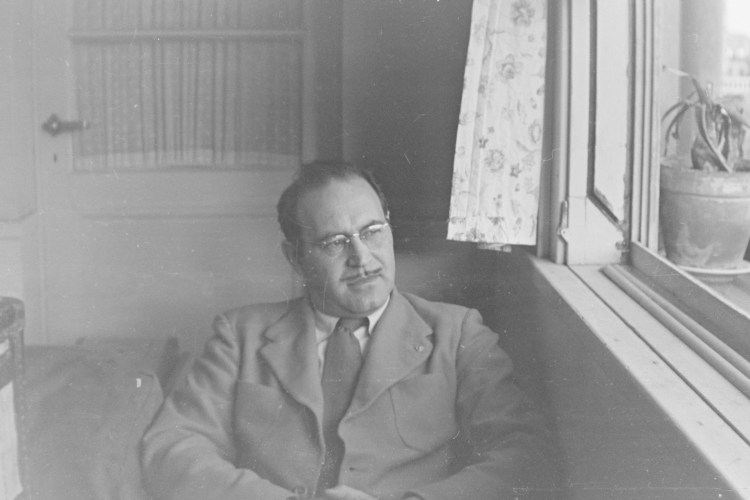
He is the one who suggested that I should sort of make a stage at each one of the sections. Later on, Marc Robinson became a very good friend and when I confessed to him that I was overawed when I met him the first time and he looked so stern, he said, “But I had to look stern. I didn’t know a damn thing. I just had arrived 24 hours before you.”
The second or third day after my arrival in Wiesbaden, I attended a major criminal trial. There was a woman accused. She was a Pole, and she was in a Polish Displaced Person Camp, which were catchall camps for people who had either fled to Germany from Russia, or who had been wandering around Europe, or who were otherwise liberated from prison camps (from German prison camps.) And this was a camp mostly full of Poles. This woman was accused of having killed her newborn baby, having choked it in the toilet of the camp and shoved it under the partition into the next cabin. Those were the facts that were to be ascertained and the woman was to be tried for this very serious crime. Now the three judges were, as I said, all Americans from the Legal Division. The court reporter was “Guggi,” Fred Guggenheim. [ed: Fred Guggenheim became a lifelong friend to the Gruders on two continents.]
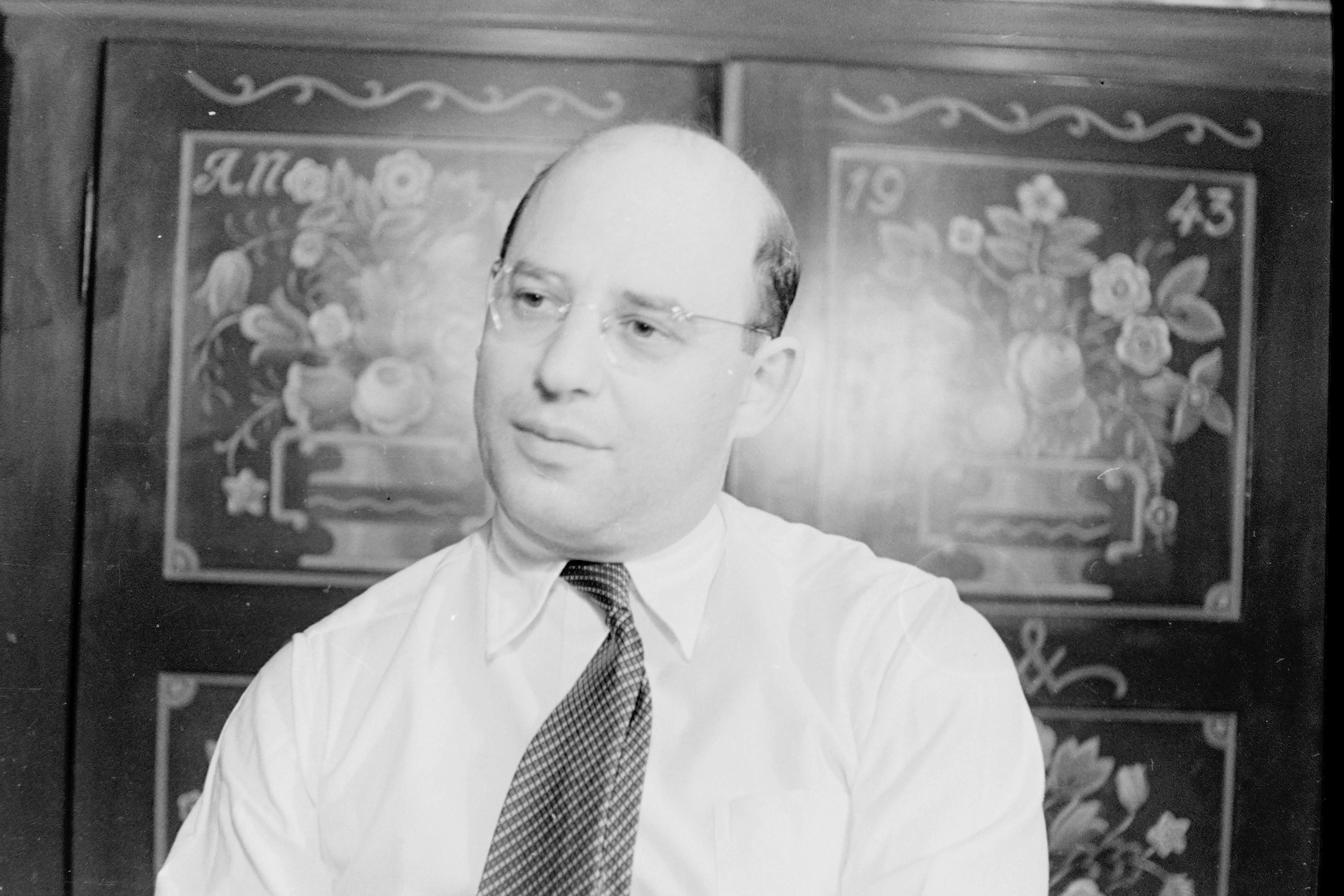
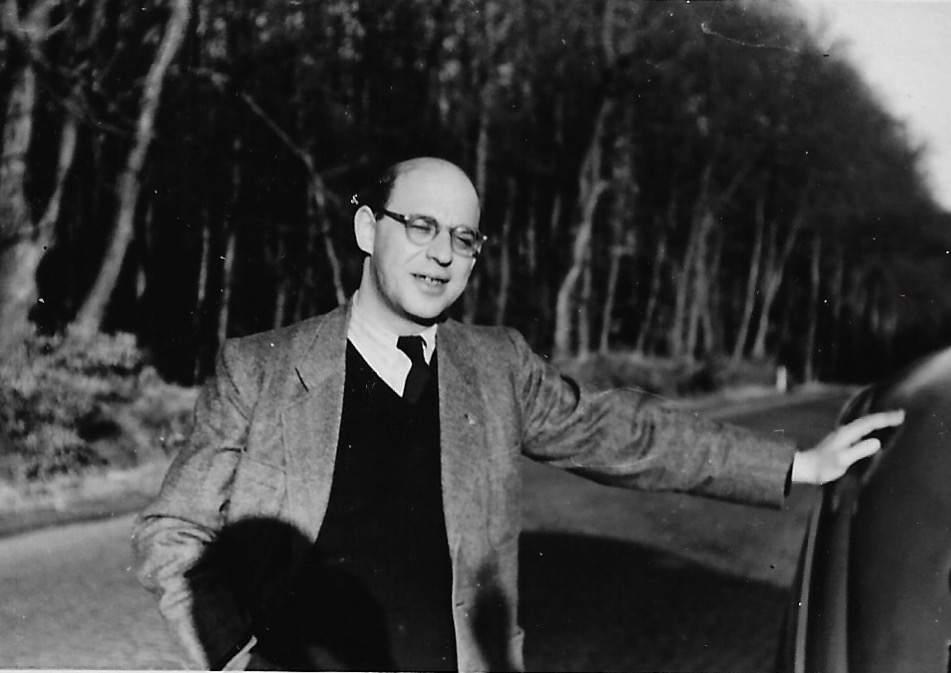

And there was a lady translator. The prosecutor was a very gifted Texan who became absolutely brilliant when he was drunk. He had the most fabulous vocabulary when he was drunk and very so-so when he was sober, and during this trial he was sober. The assigned defense attorney was a man of whom we didn’t think very highly, but he had much sympathy for this dim-witted client of his. As a matter of fact, everybody did; all the witnesses did. And I sat in the audience and listened, and it became quite clear that the German doctors who were called in as experts all gave testimony which tended to show that the woman didn’t know what she was doing, the woman was not in her right mind, that she was non compos mentis. They couldn’t come out and say so because, really, nobody asked them.
As I told you, this was tried under German law and the judges weren’t too proficient in German law. The woman had given as a defense that she didn’t know she was pregnant, and she found herself with what she thought was a belly ache in the toilet and, suddenly, the baby. She was completely desperate and didn’t know what to do and just shoved it under the partition of the toilet, something to that effect. A horror story, but when you saw the woman and heard her, it wasn’t entirely implausible. She had been a virgin before. She was a devout Catholic and, for some reason of his own, the prosecutor made a big deal of the fact that she was a Catholic. I don’t know what he had in mind, why this was so important to him, because he seemed to have believed that the idea of a childbirth out of wedlock horrified her so because she was a Catholic. Well of course, if he had known more about the Catholic religion, he would have realized that murdering the baby was worse in any religion. The defense attorney had no idea of pleading momentary insanity or something to that effect. And while one — oh yes, there was a camp doctor, also a Pole, who testified, in his testimony he confirmed the statement of the woman, that he told her only six weeks before she gave birth that she wasn’t pregnant. He stated this under oath, and the German doctor, who kept on saying that the woman was in a state of mind.
Anyway, I noticed that there was a mistake in translation. When he had said in German that the woman was beset by questions of terrible emotional strain, the translator had said that she was beset by moral scruples. And only after this had been said, it dawned on me after a while, that this didn’t convey what the doctor had meant. He was talking about being momentarily insane. It had nothing to do with scruples which played into the hands of the prosecutor who talked about questions of morals. I sort of shifted around my seat and made faces. The President of the court noticed that, interrupted the trial, and asked whether there was anything wrong. I told him yes, there had been a mistake in translation. And they checked back into the records which Guggi had kept and read back what was said. The translator confirmed that the translation was incorrect. Guggi also confirmed that. Then the record was set straight, but of course the three judges and the two, the prosecutor and the defense attorney, were completely baffled because they didn’t see where the significance was. Well, during the lunch break I took the defense attorney to one side and showed him somewhere in the back of the criminal code where it says that if somebody isn’t able to tell right from wrong then he cannot be guilty of a crime. It takes ill intent to be guilty of a crime and, being unable to form such an ill intent, she cannot be guilty. He was most grateful, and the trial resumed. I was appointed as friend of the court and sat up there to watch the translation and the defense attorney made an impassioned plea about the newly discovered element and, to my great surprise, the woman was acquitted. I would have — I wouldn’t have accepted the plea of momentary insanity had I been the judge and I would have given her a suspended sentence. You can’t have people run around and kill babies. But anyway, she was acquitted.
Well, I was a great hero of this particular trial, and they tried to get me into the branch of the legal division that dealt with court cases. But I sort of backed out, begged out and said I want to examine the other branches. This is how I came into the branch run by Ted Ellenbogen, which was the legislative branch and legal advice branch all rolled in one. It turned out that Ted Ellenbogen was also a Viennese, however he had gone to the States when he was a small child. But he still spoke German and we hit it off and the idea of being able to write laws, to pass on the laws that the Germans would enact, and to determine whether they did violate democratic principles (in which case the military government would exercise the veto power it had reserved unto itself,) struck me as the most fascinating part. It’s very rare that a lawyer gets a chance at writing laws instead of interpreting them, and I opted for that branch which was a very lucky decision. Ted Ellenbogen was a very, very, difficult task master. A very kind person who would never criticize anything one wrote sharply or unkindly, but he would say, “Look, if I had to write this, I would write it this way.” He would do it in red ink and there was a “C” over it, in his corrected version.
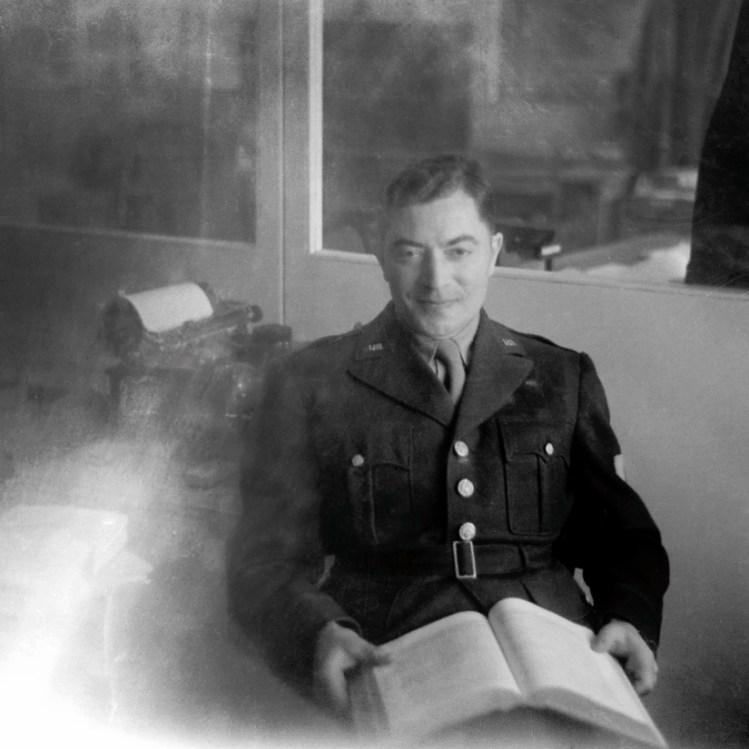
Now, if I ever ended up writing understandable English, it is thanks to Ted Ellenbogen’s training. He was meticulous. He was a nitpicker, but when he picked nits, he was right. The three of us who worked for him often groaned at the need of writing something three or four times but what finally came out was an excellent product. It was for me, and not only for me, a fascinating period, an exciting time.
I think I’d like to tell you a little bit of what military government set out to do, what its purpose was. In order to put this in perspective, I have to go back a bit. As the allied armies progressed and pushed back the German defending forces, cities, villages, regions were overrun. There was nothing left – that is, no administration left. The various places had been administered by Nazi appointed officials, from the mayor up through the various layers of government. The sweep was such that these officials were very frequently the first who fled, who were killed, or weren’t there. And military government detachments of the army moved in behind the tanks, behind the troops and took over the city, the entity. An officer was the Stadtkommandant, the city Kommandant, and he was responsible for establishing the basic, the things that are basic for a city. Water supply, firemen, food supply, what have you. It is at that particular task — I’m speaking about the American army, although the same held true for the British, the French, (yes, the French also had an army,) and the Russians — as far as the American army was concerned, I must say that I was full of admiration at the resourcefulness, at the ability to improvise, which was shown by very average Americans. Some of these city Kommandants who were suddenly responsible for the services of a fairly large city were civilians in uniform, some of them gas station operators in the States or people equally unprepared for what they had to do. And yet, on the whole I think that they did an admirable job.
The Potsdam Conference had determined, basically, the boundaries of what later became the four zones of occupation. I’m concerned mostly with the American zone, which consisted of three Lände and had one sector in Berlin. Berlin was divided into four sectors and jointly administered by the Allies, although each one had a sector, had responsibility for a particular designated sector.
Perhaps you know that the Allies had insisted on unconditional surrender by the Germans. There was much discussion about it, during the time and even after, whether this was an entirely good idea. But there it was: unconditional surrender. That means none of the administrative organizations of the country were allowed to function. None, down to the village level, up to the parliamentary level. It was abolished. All Nazi laws were, by order and rule of the military government, were declared null and void, and Germany was administered by the four Allies. Now that’s a formidable task. You have to begin somewhere to organize and by the time I got to Germany that organization had already made certain progress. We (whenever I say “we,” I mean military government) selected and appointed people. We selected them from people we had liberated from concentration camps – Germans — we selected them among people who were known to us, through intelligence sources, of having been anti-Nazis.
That, what I’m just saying, is true for the American zone. The French had a more cynical attitude. They picked Nazis with known administrative capability, on the theory that a Nazi supervised by a distrusting Frenchman was a safer bet, as long as he was efficient in what he was doing, than relying on the so-called anti-Nazism, because the French very cynically took the attitude, a Bosch is a Bosch is a Bosch, and didn’t trust very much such things as anti-Nazism in Germany. I cannot tell you too much about the Russians except that the administrators that the Russians had were, very frequently, people who had fled Germany to Russia. They were good communists and they had, for instance, in Berlin, people who spoke German as well as I did. That is, former Germans. They were quite efficient in their administration. I know least about the British however, many years later, when I came to the British Zone, I discovered that the British usually used in administrative posts people who had some experience in that kind of work back in England. Thus, the man in charge of police matters was a former police official from England.
The most idealistic approach was that of the Americans and I find no fault with it. I don’t believe that the trust was misplaced. I think it worked amazingly well. It began with the appointment of people on the local level – village, city level. And by the time I got there, by the end of, by the second part of 1946, we were in the process, we had authorized the formation of parties, of political parties. We were in the process of creating, of allowing the creation of Landkreise. Such things did exist before, but we instituted it under different leadership. And elections were prepared, were being prepared, but not to come for a while. Anyway, there was even the beginning of a Land parliament, that is, a parliament in each one of the three Länder administered by the U.S. military government. I don’t remember when the first Landtagswal [elections] were held, but I do know that by the time I got there, there was already in existence a Land parliament for the Land of Hesse and parties were presented therein, including a Communist party. These parliaments were preparing laws to be passed and, as I said before, the military government, which was the ultimate sovereign, had reserved unto itself the right to veto legislation. Legislation was necessary because, as I already stated, Nazi laws had been abolished. Therefore, when you wipe away a whole layer of laws, what remains is the status quo ante. The old German Reichs law revived and some of it was undesirable. Some of it was unusable. It was antiquated because it went back to the early 30s. So, new laws needed to be passed.
Also, new laws were necessary to cope with the new situation, the post war situation, with a flourishing back market, with a total absence of a normal currency, with bringing order into the chaos in which Germany found itself at the end of the war. In Hesse we had appointed a minister of justice, August Zinn, who became a very good friend, and between Ellenbogen, Tony Crea, and myself, we had devised something which then was, became, a model for the other two Länder. We felt that a budding democracy – because we all were imbued with the idea that we are going to teach democracy to the Germans, not at all a hopeless undertaking because after all there had been some previous experience, even if it had been dormant for a long while – and we felt that to allow a group of grownup men, experienced some of them (experience that they got sometimes in concentration camps,) and to let these people play legislator only to find after they passed the law that military government would veto it, we thought that was undignified. That was humiliating for them and felt that there was no need for it. We conveyed that the various party faction leaders and the government leaders, the government people who submitted, who proposed the laws, we agreed on the process where they would let us in on the proposed laws while they were still in the discussion stage, affording us an opportunity to point out to them where the law may run afoul of democratic principles, which we tried to instill in them. This sounds awfully schoolmasterish. That wasn’t the intention, and it wasn’t a fact. It was merely a matter that we were included in the process to look over their shoulder and it was a matter of tact and decency to intervene and interfere as little as possible. And indeed, it was rarely necessary – here or there.
Mostly, the suggestions had to be made in the area of constitutional concepts. First of all, there was no constitution. When I say constitutional concepts, I mean, really, American concepts of due process of law, of “enabling legislation” which is a basis which wasn’t very much used in Germany. The lawmaker passes a law, enabling the ministers to do certain things and the ministers then issue ordinances to implement the law. Now, this is a process quite clear and quite well known in American constitutional concepts, that no minister can order anything unless the law enables him to do so, allows him to do what he intends to do. It has to be spelled out. Now the Germans were not used to that. Ministers issued ordinances, and sometimes without any basis in law. Now those are the things that we did point out to them and where we did intervene. But I say with pride, retrospectively, that in no single instance did the military government of Hesse ever veto a law passed by the Hesse Landtag. As a matter of fact, tact was carried to such an extreme that we did not, deliberately did not approve laws that that were passed by the Landtag, but we wrote letters, “the military government does not choose to exercise its veto power regarding” that particular law.
As you can imagine, this whole process entailed a lot of contact with German political figures from the minister down to all his minions, as well as party leaders, the Minister President of Hesse. And, obviously, both Ellenbogen and I, speaking German, we had a very good relationship and very frequent contacts well known to our boss, the military governor, who was a complete idiot, a lunatic. But he had a — he called himself Dr. Newman. He was a “doctor.” He got a doctorate of education in the States, somewhere in New Jersey, but he was a megalomaniac and would not have lasted very long had it not been for the fact that he had a superb deputy, Frank Sheehan, who ran the show. And Frank Sheehan came with experience. He was the city manager of Portland, Oregon in civilian life.

I’d like to interject here something that goes back to my interview with Mr. Fisher, that long interview which led to my employment. He asked me at one time whether I, an Austrian Jew who had suffered persecution, would not feel ressentiment [resentment]. He would fully understand if I did. He was very tactful about this. As he brought it up, it was quite clear that this was what he was talking about and how judicial — mind you, we were considered for a judicial position, as judges — how just would we be if we were to try Germans. And I countered that with a statement that I can only speak from my own experience and that is, that a lawyer is trained to exercise judicial judgement. It’s part of what he learned, and he has been trained to filter out personal emotions when he deals with the law. Now I was reminded of that conversation when I am talking about my relations to Germans with whom I came into contact, and those I saw in daily life on the streets.
I felt no ressentiment, and I attribute this to the fact that I had participated in the military action that defeated the Germans. I was part of it, and that sort of took care of any feeling of ressentiment. That doesn’t mean I forgot or wanted to forget but I didn’t apply it to the individual. And the individuals I saw were miserable. They were not only defeated — they were hungry, poorly dressed, freezing, and miserable human beings. You can’t hate them. There’s no visible – you didn’t run into any “Nazis.” I hardly met anybody who would admit that he had been a Nazi or a member of the party. We knew, of course, that there must have been thousands, millions. But you didn’t see them, you didn’t recognize them, and what you did see was a miserable piece of humanity, or at least people with a human face. The people we had daily contact with, in the office, people in the Ministry and in parliament, were not only people we had picked, but they were imbued with the desire to rebuild, to make the country whole again.
 Victor Gruder